European leaders have pledged to raise billions of euros for medicines and the global fight against the coronavirus. The EU leaders aim to raise 7.5 billion euros on Monday, May 4, in an online pledging conference.
The European top politicians stated they support the World Health Organization’s call for joint action and announced the launch of a global collaboration platform for research and life-saving therapeutic and diagnostic treatments.
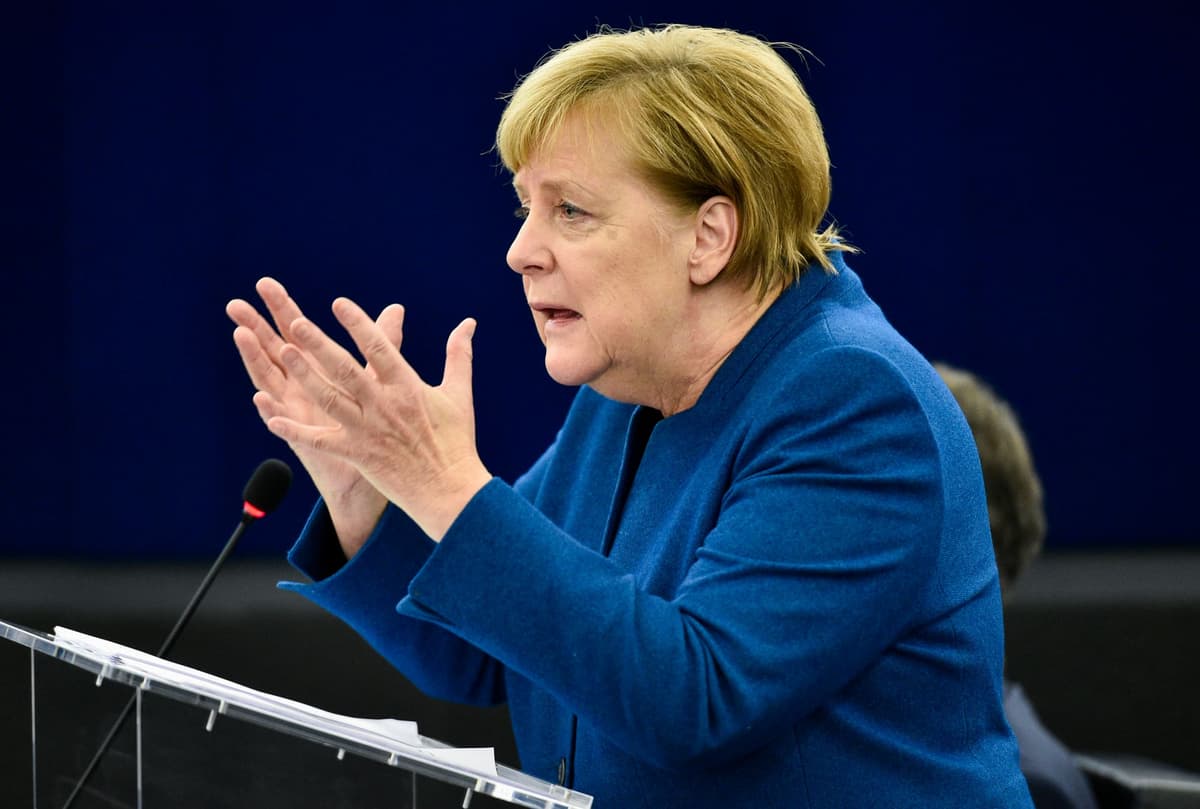
German Chancellor Angela Merkel also anticipates that Germany’s contribution to the European Union will need to increase due to the coronavirus crisis. With this plea, Merkel paves the way for a new type of European debt arrangement to finance a mega fund for economic corona recovery. Soon, the 27 EU Commissioners will present their proposal for revising the EU multiannual financial framework 2021-2027, possibly coinciding with a new EU summit.
Regarding such a major adjustment of the European budgets, Merkel said "that Germany must assume many more obligations than what has been included in the plans so far." Until now, Germany was considered among the ‘frugal’ countries, together with the Netherlands and Austria, which believed that more budget cuts were necessary.
Germany is thus giving political room to the 27 EU Commissioners to introduce a European tax, or to issue eurobonds. Until now, a large taboo exists among many EU member states on this matter. According to Merkel, this increase in the EU budgets is necessary to continue investing in the aftermath of the coronavirus crisis, so Europe will not become entirely dependent on countries outside the European Union.
On July 1, Germany will take over the rotating presidency of the European Union for six months. Then, besides health issues (corona fund) and climate (Green Deal), other matters will also be on the agenda, says Merkel. As examples, she mentions levies on financial transactions (European internet tax), minimum tax rates, or a joint emissions trading scheme for shipping and aviation (flight tax and CO2 levies).
This easing of the German position fits with a French strategy note (a “non-paper”) leaked at the end of last year, which proposed that Germany would put forward drastic proposals in autumn 2020 for the “shaking up of the entire EU,” that these would be widely discussed throughout 2021, and finalized under the French presidency in early 2022.
According to EU diplomats in Brussels, the Netherlands has indicated it is willing to cooperate (read: co-pay) in the mega Marshall Plan for economic recovery after the corona pandemic, and thus also to the revision (read: increase) of the EU multiannual budget 2021-2027. However, the Netherlands believes it must first be established what is or is not covered by the damage compensation scheme.
President Christine Lagarde of the European Central Bank (ECB) has warned European politicians that the gross national product in the eurozone could fall by as much as 15 percent due to the corona pandemic. Lagarde estimates that in a baseline scenario, there will be a 9 percent decline in prosperity.