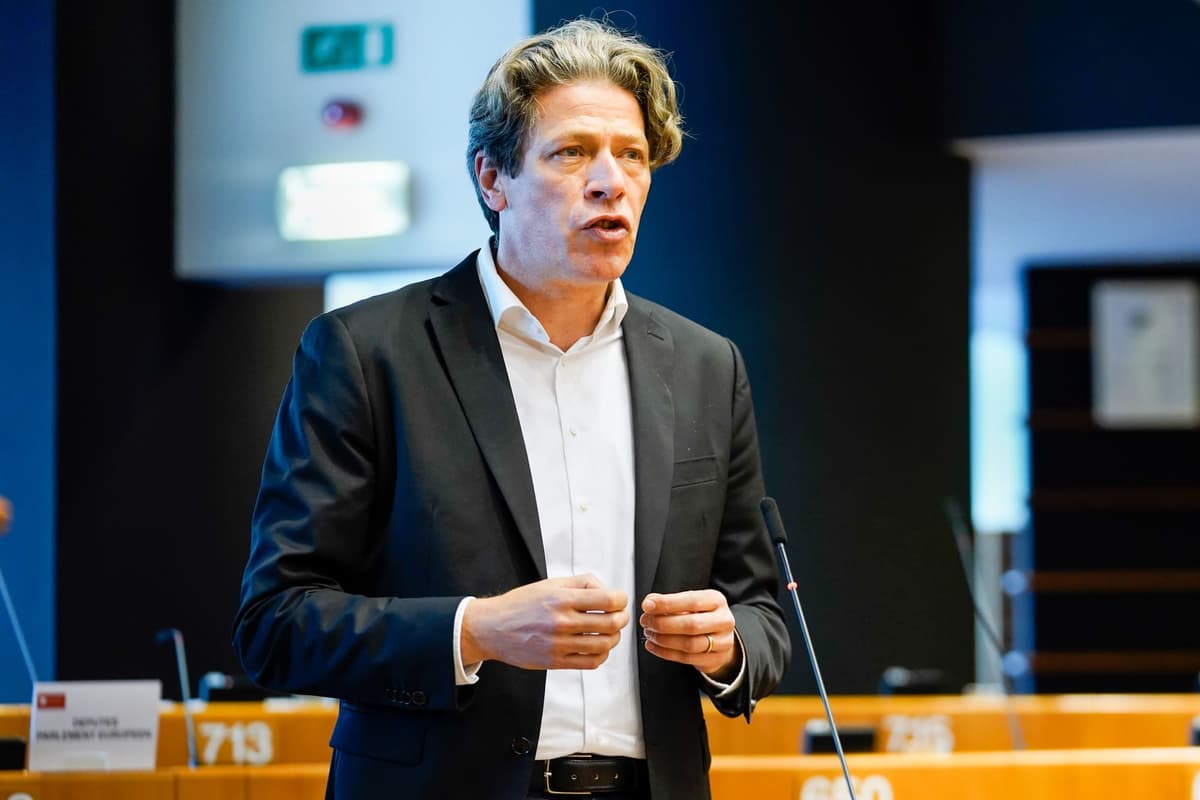
Members of the European Parliament questioned the president of the ECB, Christine Lagarde, for the first time since the outbreak of the coronavirus crisis. There was much criticism of the extensive bond-buying policy.
During the quarterly 'monetary dialogue,' most Members of the European Parliament from the Committee on Economic and Monetary Affairs focused almost exclusively on the ECB's recent purchase program. The bond-buying programs reduce the costs for companies to borrow money on the capital market. The aim is to give companies the space to weather this crisis well and continue to invest.
Although there was also support for the ECB's purchase policy to finance the corona recovery fund, others cited various reasons why the bank had acted too quickly and too extensively. Opponents warned of the risk of providing cheap money to multinationals and environmentally polluting companies. Currently, the ECB still buys bonds from companies that cause significant harm to people and the environment, it was argued. For example, bonds from Shell, Total, and British American Tobacco are being bought up.
“Companies that inflict damage on people or the environment must be excluded,” said Dutch social democrat Paul Tang (PvdA/S&D). “Lagarde has often stated she wants to make ECB policy more sustainable, but actions lag behind. Especially now that the ECB is rapidly injecting large amounts of money into the economy, it is important to ensure that this money ends up in the right place. Companies that harm people or the environment must be excluded.”
Paul Tang: “Unfortunately, most of the ECB’s money flows on to shareholders. Shell and British American Tobacco each paid out €1.3 billion in dividends. And the owner of fashion company Louis Vuitton has received more than €600 million in dividends. This only makes billionaires richer during this crisis. That is why I told Lagarde to drastically adjust the purchase program.”
The massive ECB purchases of government bonds have previously come under fire from the German Constitutional Court. Lagarde emphasized that the ECB has taken into account “proportionality” and conducted a “cost-benefit analysis” when making decisions — two key terms from the German ruling. She said the ECB would assist the Bundesbank in alleviating the court’s concerns.
But Derk Jan Eppink, the Dutch FvD member in the European Conservatives and Reformers group, said that the ECB’s enormous debt purchases only aim to keep the southern countries afloat.