

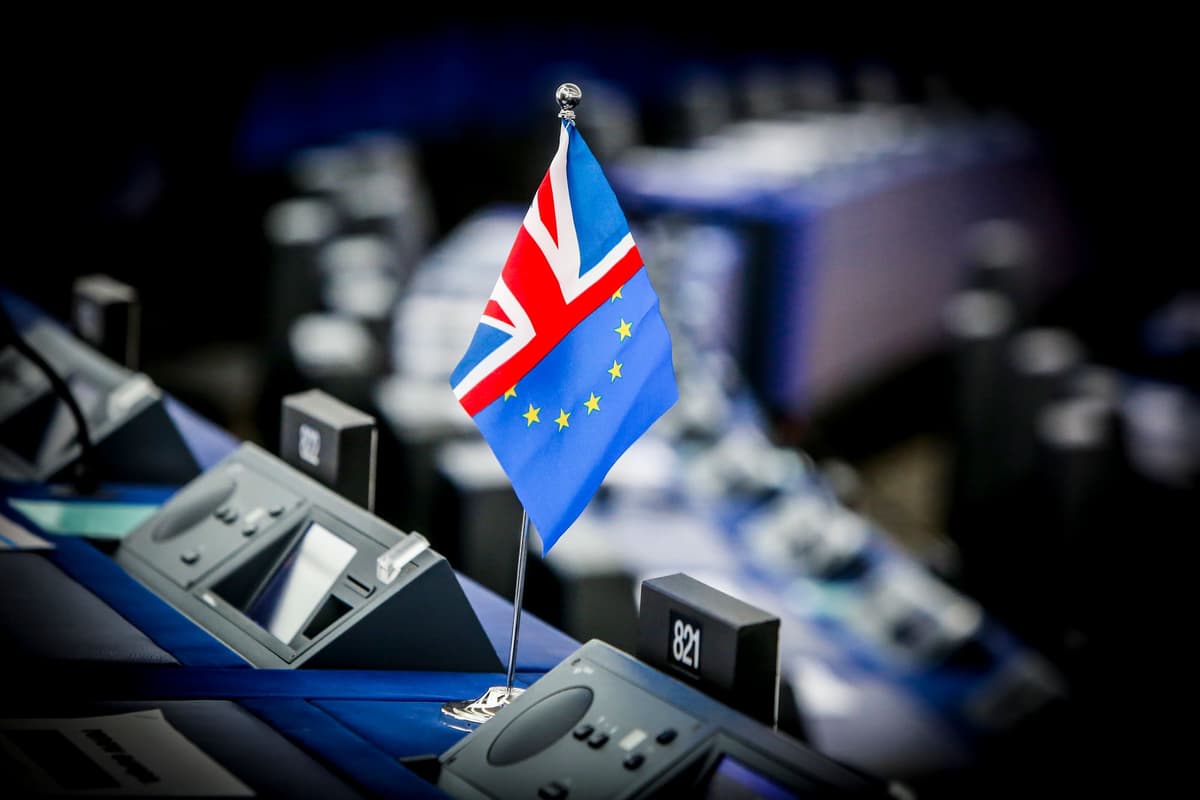
British Brexit supporters will be allowed to hold a celebration on the square outside the House of Commons at the moment their country leaves the EU. The authorities in London have in principle given the green light for this. The group Leave Means Leave is organizing the event on Parliament Square on the evening of January 31.
It is still unclear whether the bells of Big Ben will also ring. The tower is currently under restoration. It costs more than 584,000 euros (half a billion!) to operate Big Ben for just a few minutes. Prime Minister Boris Johnson has suggested that the money could be raised through crowdfunding.
Critics consider a “triumphant” party inappropriate. It is not a pleasant event for millions of EU citizens in Great Britain who still do not know exactly what their legal status will be. Exuberant celebrations could make the experience even more unpleasant for them.
Promotion
British Prime Minister Boris Johnson promotes Brexit as an opportunity to allow the United Kingdom to flourish, but economists question this. The decision to leave the European Union has already cost the British economy about 153 billion euros so far, researchers at financial news agency Bloomberg calculated.
Since a majority of Britons voted to leave the EU in 2016, investments by entrepreneurs have notably decreased. Uncertainty about the departure date and whether a Brexit deal would be reached made companies less willing to invest. Johnson hopes entrepreneurs will now start investing again.
According to Bloomberg economists, the ordeal is not over yet. Although the Conservative Party’s convincing election victory in December made it easier for Johnson to push Brexit through the House of Commons, uncertainty remains among entrepreneurs and consumers.
The European Union is willing to work “day and night” after Brexit to reach a trade agreement with the United Kingdom before the deadline. This was stated by European Commission President Ursula von der Leyen, who warned last week that it was “virtually impossible” to secure a comprehensive agreement by the end of 2020.
During a visit to Ireland, von der Leyen emphasized that after Brexit negotiations must cover not only trade but also other subjects. She pointed out that negotiators effectively have only eight months, because time is also needed to ratify any agreement.
Negotiations on the future (trade) relationship between London and Brussels will begin after Brexit, which must take place on January 31. At that time, the United Kingdom will formally no longer be an EU member but will comply with European rules during a transition period until the end of 2020. British Prime Minister Boris Johnson is determined not to extend this period.