

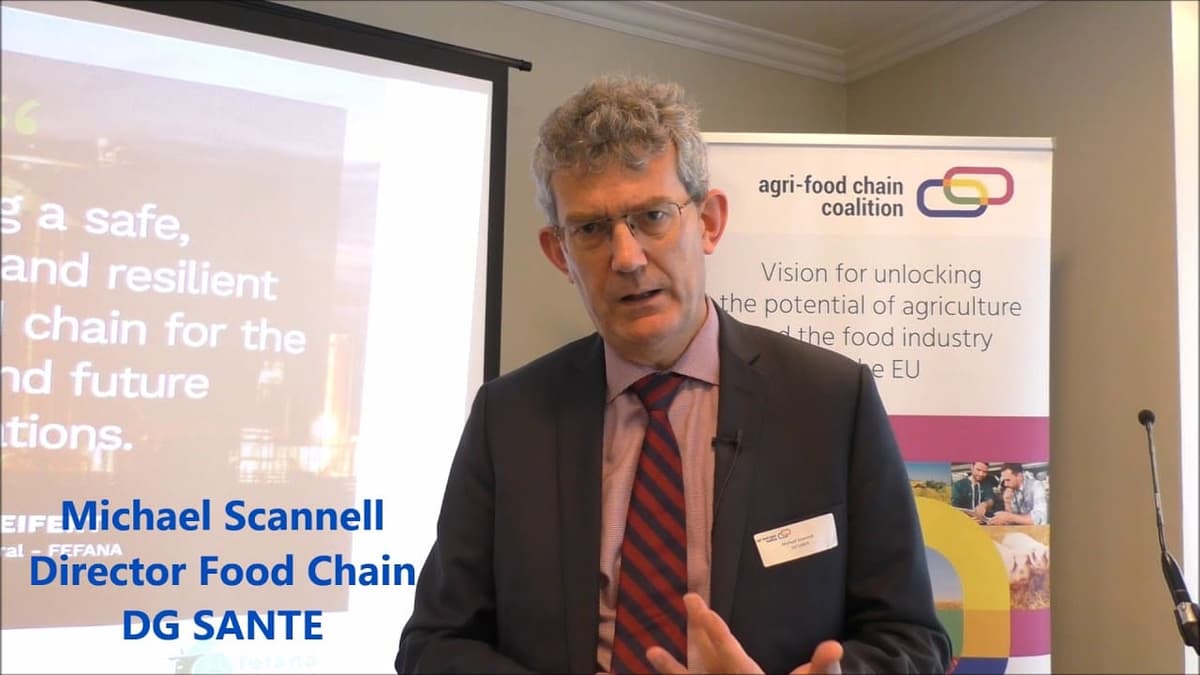
The European Union does not have procedural, legal, or financial means to specifically support the pig industry. Moreover, their poor market position is not so much due to agricultural causes, but rather financial-economic ones. This was stated by Deputy Director-General Scannell of the EU Commission in Brussels.
The top civil servants of EU Agriculture and Rural Development (EU-LNV) gave an explanation of the market situation in the pig market on Tuesday in the agriculture committee of the European Parliament. Many EU countries have been urging for months for EU support to assist their small and medium-sized pig farmers.
The EU service leadership says that most (financial) problems in the pig industry are caused by coronavirus (sick personnel, less slaughter capacity, lower horeca turnover) and by inflation and the economy (higher fuel prices, more expensive animal feed). These causes do not have an ‘agricultural’ but an ‘economic’ origin, and their consequences should primarily be addressed by the Ministry of Economic Affairs or the heads of state, according to the top civil servants.
Promotion
Additionally, for some EU countries, exports to (the large market) China have fallen away due to outbreaks of African swine fever in their country. But this does not apply to other EU countries that are still free of ASF: they continue to export to China.
The European Commission points out that EU measures must always apply to everyone: equal monks, equal hoods. The EU may not provide financial support to just a few (small) pig farms in a few EU countries. Furthermore, the top official notes that 75 percent of the pig market is in the hands of 2 percent of large meat concerns. They can still cover the current high costs.
Unlike agricultural policy, Brussels has no direct lines to individual (pig) companies, and there are no consultation lines with the EU. The pig industry wants as little to do with Brussels as possible. EU countries themselves may provide temporary financial support to some of their pig farms. Currently, nine EU countries are doing this, in various forms.
The only technical option the European Commission sees is the temporary storage of pork in cold stores. By removing part of the supply from the market, prices would (theoretically) rise. But according to the EU technocrats, the pig industry is not very keen on this because it at best only results in a postponement effect since the meat will eventually return to the market.
EU Commissioner Janusz Wojciechowski therefore does not want to intervene so far. He remains convinced that the sector will find a way out itself. Last week he promised to come up with a catalog of possible measures by the end of January at the latest. However, he rules out intervention with additional European subsidies for the time being.