

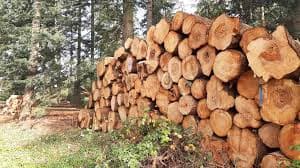
The European rules for the use of wood and plant material as fuel for power plants are becoming stricter. The European Commission aims to prevent the cutting down of trees in old-growth forests with these changes. However, EU commissioners do not want to label wood burning in biomass plants as environmentally unfriendly.
The European Commission wants to expand the 'no-logging areas' so that old-growth forests and peatlands will also fall under these 'no-go areas' from now on. Additionally, small power plants will be subject to the stricter regulations. According to Financieele Dagblad, this is part of a proposal the European Commission will present in just over two weeks.
The EU considers burning (residual) wood to generate energy as renewable energy and also needs it to meet climate targets. These plans are relevant for the Netherlands, which until recently granted more than ten billion euros in subsidies for the construction and operation of biomass plants.
Promotion
Burning tree trunks as fuel for power plants accounted for more than half of the Netherlands’ energy from renewable sources last year.
In the Netherlands, burning wood has been a topic of debate for years. This has led to certification marks for 'sustainable' wood. Many people do not consider cutting down and burning trees to be sustainable at all. This discussion has played a much smaller role so far in other EU countries.