

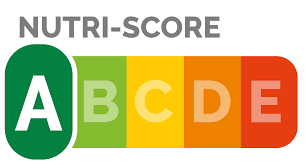
A working group of seven European countries has established revised criteria for the introduction of a uniform European food label, Nutri-Score. The changes are intended to make the index proposed by France more user-friendly with “dietary recommendations” in terms of health.
The adjusted criteria also aim to bring the 27 EU countries more in alignment, as another Italian model is also on the table at European meetings. The currently revised criteria were developed by Belgium, France, Germany, Luxembourg, the Netherlands, Spain, and Switzerland.
According to the scientific committee, the proposed Nutri-Score is “effective,” but adjustments are still needed within food categories. Recently, Mediterranean countries have protested against warnings about excessive use of olive oil. There is also ongoing disagreement over whether all French and Bulgarian types of cheese still qualify as ‘cheese.’
Promotion
In the coming months, five product categories will be adjusted. Like oils, foods that are “lower in saturated fat” will benefit from better classification. Fatty fish will also be ranked higher so that consumers can better identify them as ‘healthy food.’ Finally, the classification of dairy products will be revised with better differentiation between sweetened and unsweetened products.
With these adjustments, a European Nutri-Score will align more closely with the Dutch “Schijf van Vijf.” Due to the absence of a European decision, some commercial parties in certain EU countries have already started implementing the logo, such as Albert Heijn, Jumbo, and Plus. Increasingly, A-brands are also placing the logo on their products.
In countries like France, Belgium, Luxembourg, Germany, Spain, and Switzerland, the Nutri-Score has already been successfully introduced.