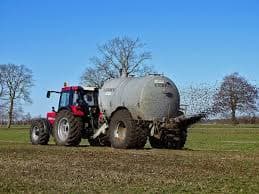
Like the Netherlands, Ireland and Germany recently lost their EU derogation rights, meaning less manure can be spread in those countries. The new right-wing Dutch coalition government, which includes a ministerial delegation from the agriculture-oriented BBB party, is trying to obtain an extension of the derogation exemption from Brussels.
Brussels has been working for some time on updating the Nitrate Directive and wants to set it for another ten years by 2027. Because sampling and measurements already clearly show that many EU countries will fall far short of their nitrate targets, enforcement is already being tightened.
This problem has long been known, and several countries have already faced stricter regulations and sanctions. In 2022, Germany narrowly avoided paying many millions by finally limiting or completely banning manure spreading in several vulnerable areas.
In response to the threat of legal action, the Flemish government has stated that it has already taken various measures to reduce nitrate pollution. However, the European Commission judges that these measures are still insufficient to meet European standards. In February last year, the European Commission already took Belgium to court due to poor water quality caused by nitrate pollution in Wallonia. That case was closed because Wallonia approved a new manure action plan a month later.
Ireland is also under pressure from the European Commission. The Irish agricultural sector, an important economic pillar, is concerned about the consequences of stricter nitrate standards. Farmers in Ireland are already facing uncertainty due to the loss of their EU derogation rights. This has a direct impact on their operations and can lead to higher costs and lower yields.
The situation in Austria is comparable to that in Ireland and Flanders. Despite efforts by the Austrian government to improve water quality, recent European Commission reports show that the measures have not had sufficient effect.
Nitrate pollution is a major environmental problem because it can cause harmful algal blooms in waters, which threatens biodiversity and worsens drinking water quality. The European Union has therefore established strict directives to combat this form of pollution, as set out in the Water Framework Directive.