

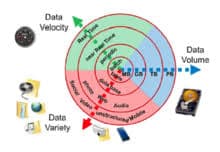
The agriculture department of the European Commission makes far too little use of big data and automated computer data when drafting and assessing agricultural policy. As a result, Brussels lacks important data for well-founded agricultural policy, concludes the European Court of Auditors.
According to EU auditors, various criteria are applied and measurement data stored in several EU countries, which means AGRI in Brussels must process much data manually in spreadsheets. In some areas, such as rural development and the use of fertilizers and pesticides, data is not collected or is inaccessible.
The auditors acknowledged that the Commission is excellent at using (Excel) spreadsheets but should also excel in big data techniques. Worldwide, organizations increasingly utilize big data, but the European Commission largely leaves advanced data analysis untapped.
Promotion
Crucially, this means the European Commission does not have sufficient evidence to fully assess the needs and impact of the Common Agricultural Policy. This also means adequately substantiated forecasts cannot be made. The Common Agricultural Policy involves more than 400 billion euros annually.
“Data is the bread and butter of informed policymaking, and big data is becoming the gold standard in agriculture,” said Joëlle Elvinger of the Court of Auditors. “We live in the year 2022, and huge amounts of data are our reality,” she added. “Knowledge is power. But without data, there is no knowledge.”
The audit team specifically examined how the Commission’s Directorate-General for Agriculture (DG AGRI) has used available data for policy analyses in recent years. Staff manually process data from some 115 reports into an Excel table to analyze information from EU countries.
“In 2022, excelling only in Excel is not enough,” the auditors said on Tuesday during a press conference, emphasizing that this is necessary to make data analysis and agriculture “fit for the digital age.”