

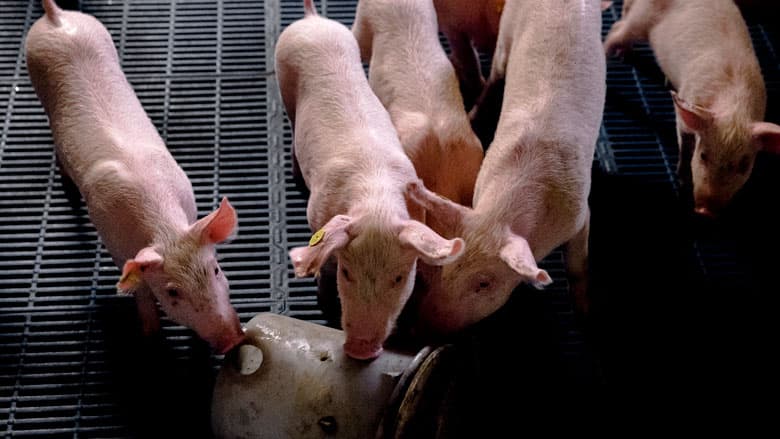
The European Commission has approved the Belgian buyout scheme for high polluters among Flemish pig farmers. This allows pig farmers in Flanders who want to quit to be bought out in order to reduce nitrogen emissions, and the Flemish cabinet has now also adopted a national nitrogen plan PAS.
The European Commission does not consider the €200 million to buy out high polluters as illegal state aid. The Netherlands has also been discussing plans to buy out Dutch high polluters with Brussels for months, but no agreement has yet been reached.
The voluntary buyout scheme in Flanders is an important part of the nitrogen agreement that the coalition in Antwerp established last year. At that time, the Flemish government agreed that pig farming must be reduced by one third. There was fear that the European Commission would view the €200 million as unlawful state aid.
Promotion
The Flemish scheme is open to small and medium-sized pig farms, in the form of direct subsidies up to 120% of the loss in asset value. The money may not be used to start another pig farm elsewhere: the Flemish subsidy must genuinely lead to a reduction.
In Dutch agriculture, such conditions are referred to by some as a ‘professional ban’. Nitrogen mediator Johan Remkes proposed last year to buy out a few hundred agricultural high polluters as soon as possible in order to legalize PAS reporters.
Dutch ministers Van der Wal and Adema are working on a broader, regionally oriented nitrogen approach but have not yet obtained Brussels’ approval for their buyout plans.
The European Commission has tested the Flemish scheme against EU state aid rules and concluded that the subsidy scheme is necessary and appropriate to support the reduction of nitrogen emissions in the agricultural sector and thereby contribute to environmental protection, in line with the European Green Deal.