

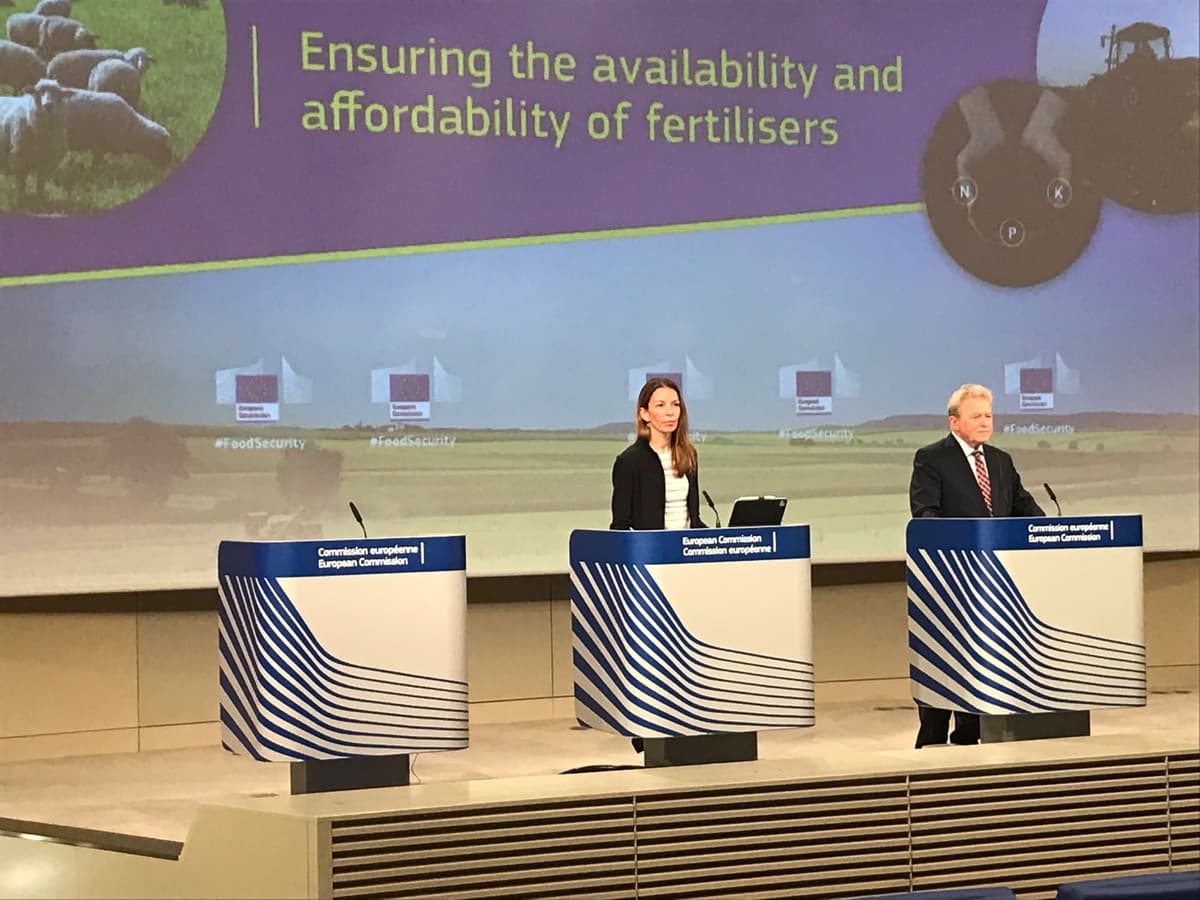
The European Commission sees no possibility in the short term to do anything for farmers struggling with extremely expensive fertilizer prices. However, Brussels is willing to quickly approve if EU countries themselves want to provide state aid to their farmers.
Moreover, no relaxation of current manure rules is expected. Only in the longer term can new ‘green’ fertilizer substitutes be authorized. Before that, a ‘nutrient management plan’ must be decided in spring 2023.
Agriculture Commissioner Janusz Wojciechowski did advise agriculture ministers to discuss their potential wish lists with him as part of the individual nutrient strategies negotiations. According to him, those procedures offer some room for country-specific exceptions. But when reporters asked about a possible ‘derogation,’ he made a grimace.
Promotion
Wojciechowski had little news to share Wednesday afternoon at a press conference in Brussels: the EU doesn’t have the money, so if EU countries want to do something for their farmers, they will have to foot the bill themselves. He does want to consider next year whether the agri-crisis reserve (over 425 million) can be used, but the 27 agriculture ministers also have a say on that.
In a first reaction, COPA chairwoman Christiane Lambert said that for the European agricultural umbrella organizations Copa-Cogeca, the disappointment is as great as the expectations: this new announcement simply does not provide concrete answers to the problems of European farmers, she said.
Commissioner Wojciechowski said the impact of the extremely expensive fertilizer varies greatly per country; some countries use little and thus require little state aid.
He also pointed out that so far 18 countries are using ‘their own money’ in various forms. And nine countries have not done so at all. Earlier this year, the EU allowed increased amounts of state aid, and many EU countries are still far from their maximum.
As a successful example of what is already possible, Wojciechowski pointed to the situation in Poland. There, the government has invested hundreds of millions of euros of taxpayer money into a national fertilizer agency. That government agency purchases very large quantities of fertilizer – with some discount – which Polish farmers can then buy at a reduced price. The difference is covered by the Polish state.