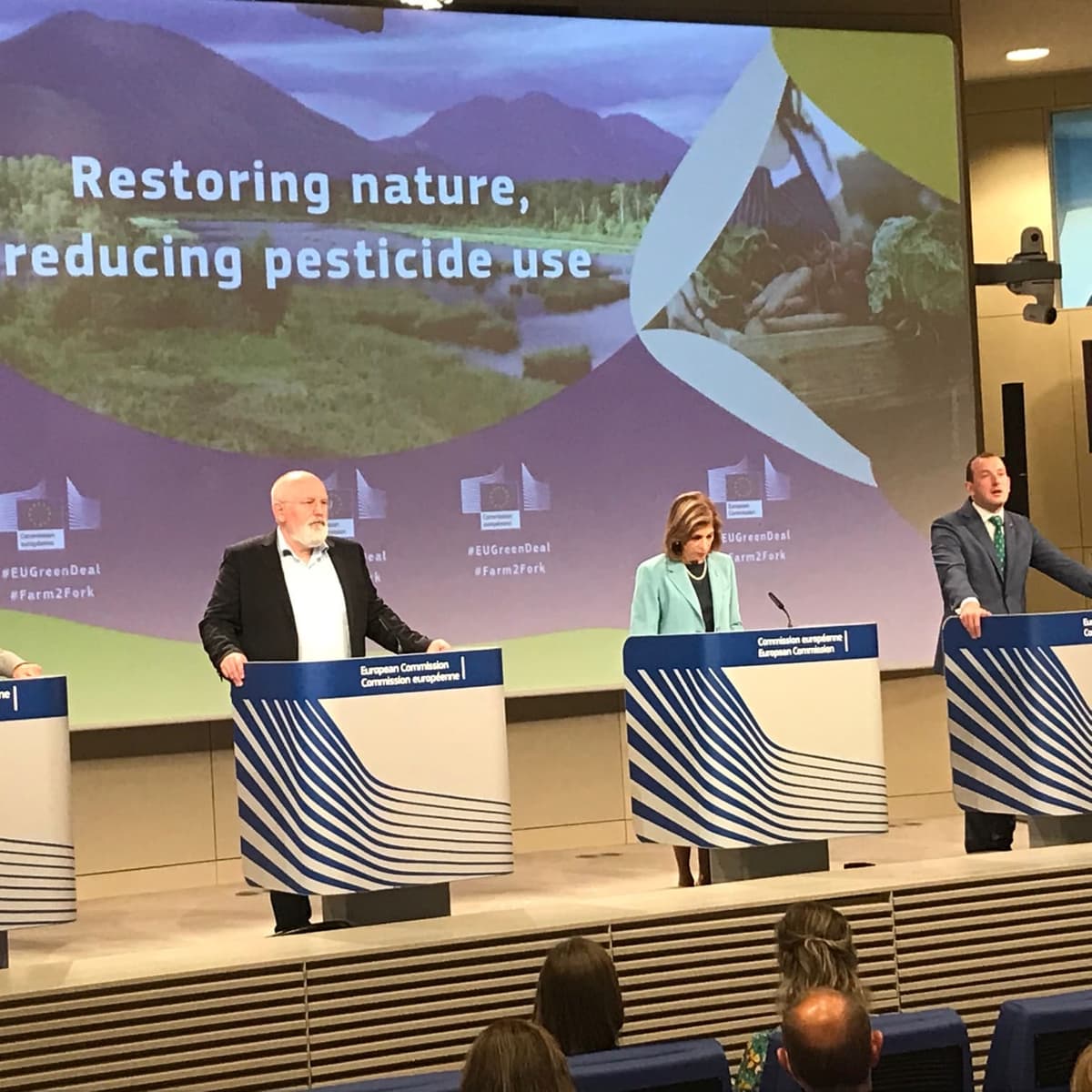
The European Commission has presented new criteria against air and water pollution, called the zero-emission package. These measures aim to further reduce pollution and ensure a healthy and clean Europe.
The European Commission proposes stricter rules for the use of pesticides in agriculture, for additives in food products, and for the dispensing of antibiotics and medicines. The new rules are the legal guidelines stemming from the Green Deal and Farm to Fork strategies. They are intended to help achieve the climate goal of zero pollution in the European Green Deal; an environment free of pollution by 2050.
The measures include, among other things, an expansion of the list of pollutants that need to be more strictly monitored in water, such as glyphosate in agriculture and PFAS in manufacturing.
To keep the air clean, Brussels wants to lower the limit value for particulate matter by more than half. Pollution must be reduced from 25 to 10 micrograms per cubic meter. In two weeks, new requirements for car exhaust emissions will be introduced. These are especially important for air quality.
EU Vice President Frans Timmermans said that every year in Europe, hundreds of thousands of people die prematurely due to air and water pollution. The longer the fight against pollution is postponed, the greater the costs for society. The European Commission mainly focuses on setting goals and limit values. It intends to leave it up to the EU countries themselves to decide how to meet these requirements.
The European Commission also wants to expand the EU directive on wastewater treatment plants. EU countries will be required to recover phosphorus from sewage sludge so that it can then be used as a “green fertilizer” in agriculture and horticulture.