

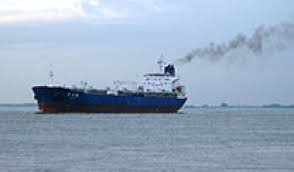
European shipping accounts for about one-fifth of the global emissions caused by ships. It is not only European freight and car traffic that is a major environmental pollutant; shipping also produces greenhouse gases.
The real environmental impact of maritime transport has now been summarized for the first time in a report presented on Wednesday in Lisbon by the European Maritime Safety Agency (EMSA) and the European Environment Agency (EEA). Shipping and transport, like aviation, are not mentioned in the Paris Climate Agreement.
According to the European Parliament, this must change. Until now, EU countries have focused much attention on climate criteria in agriculture to tackle air pollution. Agricultural organizations have long called for measures to be taken in other polluting sectors, such as industry and aviation.
Promotion
The EU has now examined and recalculated other sectors. According to the report, ships were responsible for 13.5 percent of all greenhouse gas emissions caused by transport in the EU in 2018. Within this, road traffic was by far the largest polluter with three-quarters of the emissions, while air traffic accounted for 14.4 percent of emissions.
All modes of transport must become more sustainable, smarter, and more resilient, says Adina Vălean, EU Commissioner for Transport. Ships play a major role as a means of transport between EU countries, both for people and for trade between EU member states. Transport experts estimate this will increase even further in the coming decades.
A possible first ‘solution’ is to switch to more environmentally friendly energy sources such as biofuels, batteries, hydrogen, or ammonia. Shore power supply in ports, where ships switch off their own engines and connect to a power source, would also reduce pollution caused by ships.