

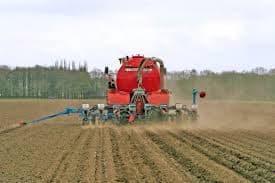
The European Commission and German Agriculture Minister Cem Özdemir have agreed on a new German manure regulation. The 'red zones' where agriculture is required to use twenty percent less artificial fertilizer will be significantly expanded from 2 million hectares to 2.9 million, primarily in the northwest. That is 45 percent more than before.
Also, within a few years, Germans must replace their 'calculations' for nitrate contamination of groundwater with more 'measurements.' Based on a denser network, new statistical methods should be developed from 2028 onwards that more closely approximate the actual nitrate pollution.
Germany has been violating the European Nitrate Directive for as long as it has existed. More than a quarter of all current measuring points report exceedances of the threshold values. Because a lot of liquid manure is used diligently, the dairy farming sector with its large barns is especially affected.
Promotion
Despite excessive values, some areas remained free of restrictions for years – for example, based on arguments ('excuses') that underground groundwater flows moved nitrate from outside. German farmers blamed cities for nitrate pollution.
According to the Süddeutsche Zeitung, the European Commission will forgo the millions in fines that Berlin was previously condemned to by the European Court of Justice due to nitrate pollution. However, this is conditional on German politics (including the federal states!) agreeing to the new regulation before summer.
"We have mastered an important phase," says Özdemir (Alliance 90/The Greens). "But we are not there yet." Several federal states, including North Rhine-Westphalia and Saxony-Anhalt, have already announced opposition, and the German Farmers’ Association is also unhappy.
Özdemir responded with relief to the agreement with Brussels because it prevents billions in fines for Germany for non-compliance with the EU nitrate directive. Özdemir appealed to the German federal states and to farmers to agree to the proposal.
According to him, this is a prerequisite to finally provide agriculture with a reliable framework. After the earlier "unfortunate delay tactics" towards Brussels, "clarity and stability are now needed," the minister emphasized.