

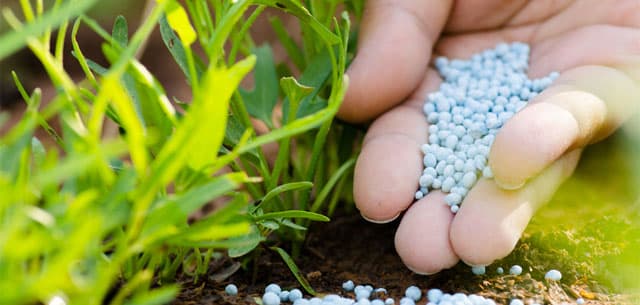
Poland is the first EU country to receive permission from the European Competition Authorities for direct state aid for the purchase of fertilizer. Poland is allowed by the European Commission to give 836 million euros in subsidies to Polish farmers, with a maximum of 53,000 euros per agricultural enterprise.
In connection with the Russian war against Ukraine, the EU earlier this month opened its agricultural emergency fund (of 500 million euros) and allowed the possibility for national state aid.
EU Commissioner Janusz Wojciechowski said that European agriculture is a free market, and that granting ‘exceptions’ for national state aid in other countries is usually very difficult.
Promotion
Wojciechowski said at a press conference in Warsaw that the scale of Polish government aid would set a record. “Farmers in all countries are affected by high fertilizer prices,” said Wojciechowski. “Only Poland has decided to help with this.”
Polish farmers can receive subsidies of 53.5 euros per hectare of grassland or pasture and up to 107 euros per hectare of arable land. The upper limit of the requested aid applies to an area of 50 hectares.
Wojciechowski noted that Russian President Putin is using gas prices as a political tool that causes a food crisis throughout the EU. The extremely high fertilizer and feed prices are especially devastating for small and medium-sized enterprises. In the new CAP agricultural policy, the European Commission is shifting the focus from large industrialized farming and horticulture to smaller rural farms.
As he noted, the issue of welfare and maintenance of livestock farming in small and medium-sized farms will be treated as a new priority by the European Commission. In the past ten years, more than 340,000 small ‘livestock farms’ have disappeared in Poland. Scale enlargement is still common in other EU countries as well.
According to the commissioner, the European food system must be based on well-functioning small and medium-sized livestock farms in order to maintain food security in all EU countries.
Wojciechowski announced that the European Commission is also working on a plan to transfer unused funds from the second pillar of the CAP to EU member states, so that they can provide additional subsidies. Brussels may take a decision on this as early as next week.