

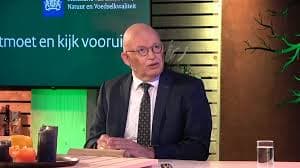
LNV Minister Henk Staghouwer says that the Russian war in Ukraine is not yet endangering the food supply in the Netherlands. According to him, there is no crisis or great risk for the Netherlands at this point. No food shortage is expected in the Netherlands.
However, EU countries are continuously monitoring the situation, Staghouwer said after informal talks at the Brussels Agriculture Council.
Staghouwer did point out that parts of the Dutch agricultural industry are already becoming vulnerable, such as the export of flowers and plants. The looming cutoff of Russian gas delivers a blow to the greenhouses in the Westland. Staghouwer rejected suggestions to decide already which major gas users might have to reduce their consumption.
Promotion
The Netherlands is mainly dependent on imports of chicken, corn, and rapeseed through Ukrainian ports on the Black Sea. But the minister called it 'still much too early' to talk about opening support funds. That might come in the third quarter.
Minister Staghouwer also indicated that, at the EU level, consideration must be given to the supply routes via the Black Sea. If Ukraine loses ports such as Odessa to the Russians, grain exports to Africa and the Middle East would also be jeopardized. Yet, Staghouwer did not want to speculate on the international consequences of Putin's war against Ukraine.
Agriculture Commissioner Janusz Wojciechowski also pointed out at the press conference in Brussels that agriculture in Ukraine and Russia is now in the process of the winter/spring harvests, and that the first major damage will become visible at the earliest in spring 2023.
He did announce that an EU note on the sharply increased prices for gas and fertilizers (which was supposed to be released today) caused by the war in Ukraine is being updated and will be published next week.
French Minister Julien Denormandie, currently the rotating EU president, has called for the immediate convening of an international task force of all agencies involved with food and agriculture.
He believes that the EU should now already formulate 'as a new political goal' that Europe must be completely self-sufficient in food and that the (recently renewed) EU agricultural policy and the Farm to Fork strategy must be subordinated to that.