

The European Commission is expanding its already ongoing in-depth investigation into tax deals in the Netherlands, now including furniture giant IKEA. The exact amount of money involved is unknown. A previous investigation by the Greens in the European Parliament into IKEA’s tax avoidance cited a figure of nearly one billion euros between 2009 and 2014.
The original investigation began in 2017 and centers on a structure involving intellectual property rights that enabled an IKEA subsidiary to pay less tax than other companies in the Netherlands. This Netherlands-IKEA deal dates back to a period when the Dutch Tax Administration offered large multinational enterprises a favorable location for their operations in the country. Through ‘tax rulings,’ these companies had to pay millions less tax in their home countries and only a small portion of that in the Netherlands.
As a result, major companies such as IKEA and FIAT, as well as the Rolling Stones and Bono, legally established their headquarters in the Netherlands. In many cases, these were housed in administrative offices or mailbox companies in the Amsterdam Zuidas area, leading many to label the Netherlands a ‘tax haven.’
Promotion
Meanwhile, the Netherlands is trying to shed that bad reputation but continues to be reprimanded on this issue in international discussions. This also happened at the end of last month when the Netherlands resisted within the EU against the way other EU countries planned to raise hundreds of billions for a mega-coronavirus recovery fund. Through this fund, companies will soon be able to partially offset their economic losses.
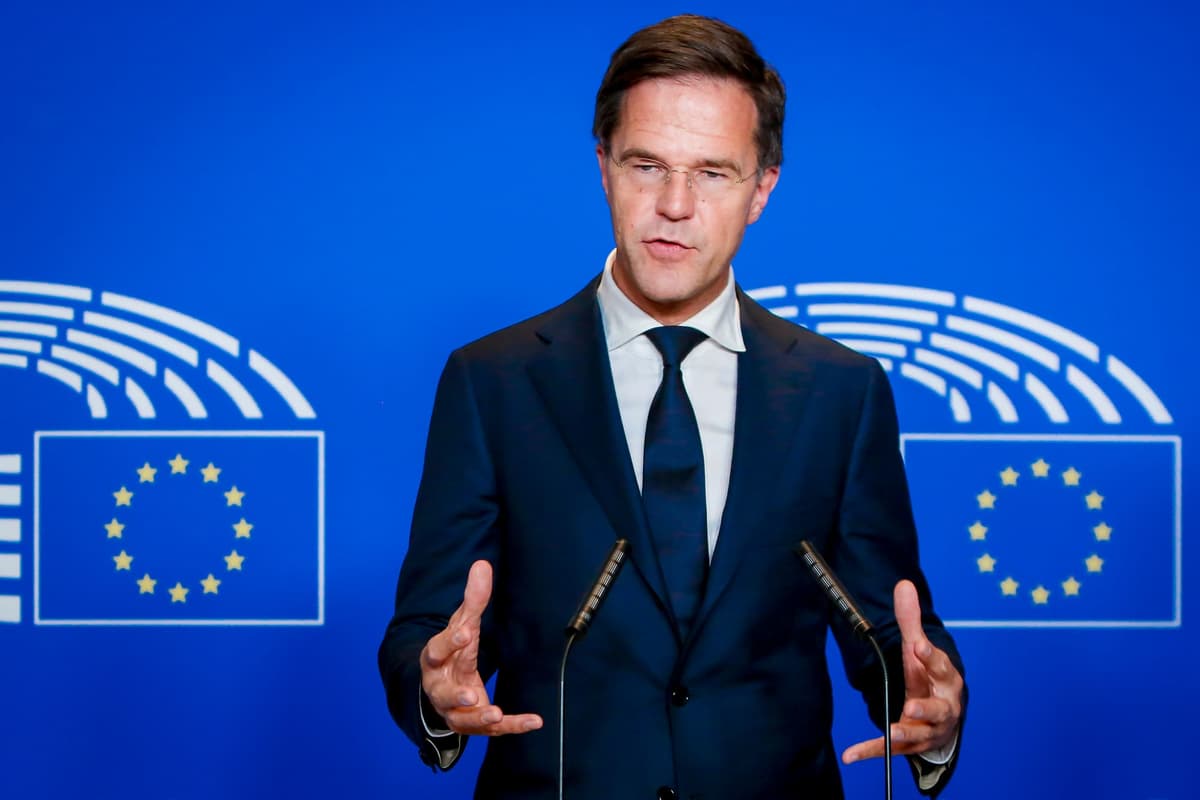
Dutch Prime Minister Rutte and Finance Minister Hoekstra were accused in recent weeks by other EU leaders of being stingy Dutch who are unwilling to contribute to the recovery of weaker EU countries, after having first diverted hundreds of millions of euros in tax revenues from those countries to the Dutch treasury for years.
Among the EU-27, France, Poland, and Denmark have so far proposed blocking companies located in tax havens from receiving corona rescue operations. Italy will soon join them. This puts pressure on such companies to abandon their Dutch tax structures.
Researchers discovered that more than 84% of the income Italy loses annually due to tax havens moves to other European countries, with Luxembourg, Ireland, and the Netherlands at the top of the list. The European Commission confirmed that individual EU countries are indeed allowed to prevent corona aid in their country from going to companies (‘with mailbox headquarters’) in tax havens.
French Finance Minister Bruno Le Maire said last week that companies registered in tax havens would not qualify for France’s rescue package. “It goes without saying that if a company has its tax headquarters or subsidiaries in a tax haven, I want to say very strongly, it cannot receive financial support from the state,” Le Maire told radio station France Info.