

Minister of Agriculture, Nature and Food Quality Piet Adema informed the House of Representatives at the end of last year that he would consider 2023 a transitional year, but the Netherlands has been reprimanded by Brussels and must comply with the EU rules.
This concerns the consequences of two separate environmental issues: the new European Green Deal and the farm-to-fork food strategy, combined with the tightening of the Water Framework Directive. The new Common Agricultural Policy was only finalized at the end of last year, meaning Dutch farmers had to wait a long time to know what was and wasn’t permitted.
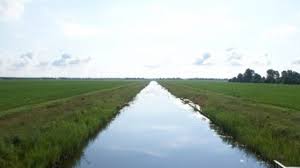
Furthermore, Brussels had already notified the Netherlands last year that it could no longer use the derogation for nitrate pollution (i.e. water pollution from spreading manure on pastures). They are now no longer allowed to fertilize along the edges of ditches and watercourses.
Promotion
The Netherlands must reduce nitrate pollution this year, not starting next year. This is mainly a signal that improving water quality should be given higher priority in the Netherlands. According to Brussels, the Netherlands has interpreted the rules too leniently. Adema calls it a ‘misjudgment.’
The designation primarily concerns pasturelands and waters in the water boards Noord-Hollands Noorderkwartier, Delfland, and Brabantse Delta. This means that 42 percent of Dutch agricultural land is designated as polluted area.
Minister Adema had asked the Committee of Experts on Fertilizer Law (CDM) for advice on this designation. He opts to make the designation at the water board level because it is currently not possible to delineate water bodies on a smaller scale.