

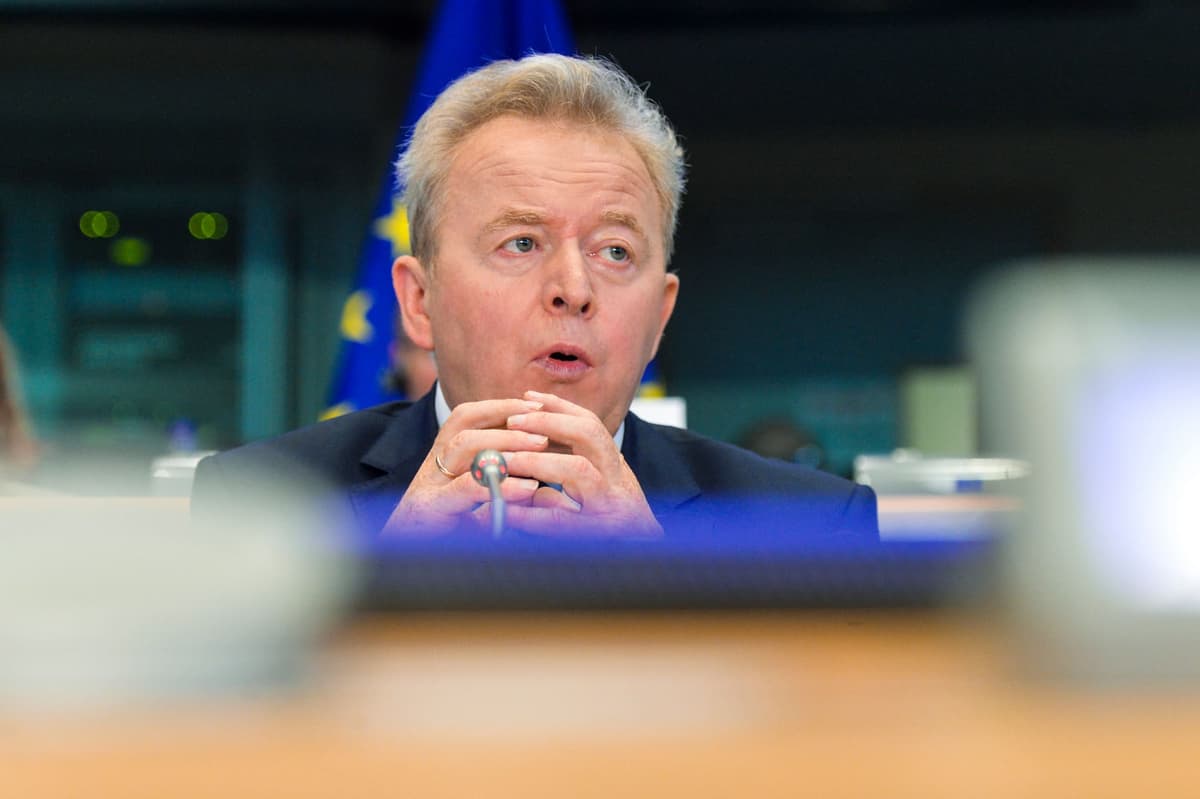
European Agriculture Commissioner Janusz Wojciechowski calls it essential to exclude Russia from international trade. As a sanction against President Putin's regime, the international community has, among other measures, cut Russia off from international payments. This has brought a significant portion of trade to a halt.
The invasion of Ukraine also threatens to seriously disrupt world markets for agricultural products and raw materials needed for agricultural production, such as energy and fertilizers. Since the beginning of the conflict, there has already been a strong rise in world prices. This has further consequences for the markets, which recently experienced historically high prices for key raw materials.
According to the European agriculture chief, agricultural exports from the European Union to the three countries involved in the conflict — Russia, Belarus, and Ukraine — amount to 10.5 billion euros in turnover, with imports at 8 billion euros. This represents six percent of EU trade. Wojciechowski calls the figures certainly important but not decisive for agriculture and food security in Europe.
Promotion
Wojciechowski will update the 27 agriculture ministers in an informal video meeting on Wednesday afternoon (March 2), just as the Agriculture Committee of the European Parliament was briefed earlier this week.
The impacts are especially significant for the eight neighboring countries, which will bear the greatest consequences of the conflict: Poland, the Baltic states, Finland, Slovakia, Hungary, and Romania. According to him, the main European agricultural producers, such as France and Germany, will be less affected.
Dutch Minister for Agriculture, Nature and Food Quality (LNV) Henk Staghouwer said in a letter to Parliament that the discussion has also been scheduled to identify actions that need to be taken within the EU, also in cooperation with other international organizations such as the FAO and the OECD. He noted that the meeting will not yet make any concrete decisions.
Wojciechowski rejected suggestions that the new agricultural policy and food strategy should be revised because of the war in Ukraine. According to him, the Common Agricultural Policy (CAP) is a very good compromise between ecologists and farmers who feared restrictions.
"I don't think the new CAP will lead to a decrease in agricultural production. On the contrary, certain measures can contribute to its development," the EU commissioner said to reporters during a visit to a French agricultural fair.