The agriculture ministers of most EU countries have serious reservations about the new fertilizer regulation presented last month by the European Commission. Most agriculture ministers are not pleased that Brussels wants to dictate how much less fertilizer may be used. They at best support the plan ‘broadly’ but have objections and concerns about various aspects.
Only a handful of countries, including the Netherlands, agree in principle that European food production in agriculture and livestock farming should become more sustainable and organic.
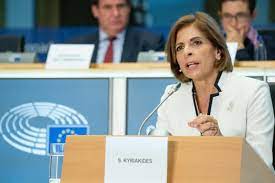
Health Commissioner Stella Kyriakides made it clear during the monthly EU Agriculture Council that the Commission remains committed to the Green Deal and Farm to Fork strategies, and that ‘doing nothing is not an option’. She did say that an individual and flexible approach will be possible for each country, and that Brussels will publish the calculation method used for the ‘percentages per country’.
Commissioner Kyriakides also emphasized that there will be ‘no ban’, and that chemical agents will remain possible ‘as a last resort’ if truly no alternatives exist.
Many ministers state that their country has already significantly reduced fertilizer use in recent years, and that this should be rewarded in some way. Those countries are unhappy with the rule that every country must reduce by at least 35%. There are also protests against the fact that fertilizer use in ‘vulnerable areas’ such as forests and Natura 2000 sites will no longer be allowed at all.
For some countries (such as Sweden or Finland with a lot of forest, or Slovenia and Greece with many nature areas) this would amount to a substantial reduction in agricultural fertilizer use. Those countries advocate for a different classification scale for harmful and banned substances versus less harmful ones.
Kyriakides told the complaining ministers that the new fertilizer law will not come into effect immediately but only after a transition period. She also dismissed the claim that no suitable alternatives exist yet for most chemical pesticides.
She pointed out that over the past years the European Commission has approved more than twenty new pesticides. Moreover, EU countries can support farmers via the eco-schemes of the new agricultural policy if they switch from chemicals to nature-friendly pest control methods.