

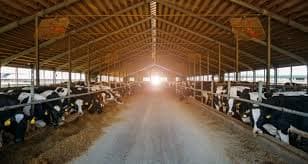
The Netherlands is basically positive about the proposal from the EU commissioners to include larger cattle farms under the industrial pollution directive from now on. The Netherlands also agrees that not only large but also smaller pig and poultry farms should be covered by the directive.
As a result, in a few years these farms will need to have the latest pollution control technologies on their premises, just like industrial polluters.
A few other EU countries have also expressed their support, but with considerable reservations. Most countries disagree with the idea that livestock farms with more than 150 animals will fall under the regulation. They also see the proposed lower thresholds for pig and poultry farms as a threat to their small family farms.
Promotion
For cattle farming, this means that farms with more than 150 animals will be included. For pig and poultry farms, the existing thresholds will be lowered to 300 sows and 500 pigs, and to 10,714 laying hens and 5,000 broilers.
Environment Commissioner Virginius Sinkevicius said at the EU Agriculture Council in Brussels on Monday that the new regulation would not be overly extensive. According to him, the directive will eventually apply to at most 13% of commercial cattle, pig, and poultry farms, which together are responsible for 60% of ammonia emissions and 43% of methane emissions in the EU.
Many agriculture ministers expressed serious concerns on Monday about the ‘equating of livestock farming with industry.’
Agriculture Commissioner Janus Wojciechowski said earlier that it would still take about one and a half years before EU legislation is amended, after which the 27 EU countries must incorporate it into their own laws, and livestock farmers will then have three years to adapt. Furthermore, Brussels will prepare an impact assessment, as is customary with almost every new law.
Dutch Ministry of Agriculture senior official Guido Landsheer (who replaced acting Minister Carola Schouten) said that the Netherlands wants to keep implementation in its own (Dutch) hands. He indicated that the rules must be flexible and proportional enough to align with, among other things, national implementation and enforcement aspects as well as practices within the sector.
Moreover, the Netherlands will prepare its own impact assessment. The country will also consider the new rules in relation to the transition in Dutch agriculture, as Minister Schouten wrote earlier in her annotated parliamentary letter.