

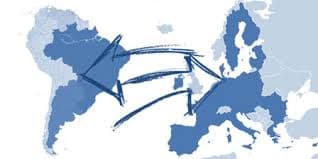
Austria is the only EU country that has so far opposed the agreement due to the adverse effects on Austrian agriculture and the meat processing industry. This rejection was made four years ago. The agricultural concerns of Austria are shared by about ten EU countries, but have not been turned into a formal rejection.
The agreement with the Mercosur states Brazil, Argentina, Uruguay, and Paraguay is intended to be signed in the second half of the year under the Spanish presidency of the EU Council. As in 2019, the trade deal could fail due to a definitive veto from Vienna. The final decision of Austria lies with Minister of Economic Affairs Martin Kocher, not with Minister of Agriculture Norbert Totschnig.
Large EU countries such as Germany and France emphasize that halting or reversing Mercosur is not realistic. The agreement has been negotiated in detail years ago, especially in the area of import and export.
Promotion
Several EU countries, including Spain, do want an 'addendum' to the Mercosur agreement regarding environmentally friendly farming methods and protection of rainforest areas. In that case, the agreement could be ratified later this year 'with a rider,' provided Austria 'moves forward.'
Greenpeace and the German Greens have spoken out against the agreement due to the negative effects on the environment and climate. They argue that importing cheap meat from South America will lead to large-scale deforestation and more greenhouse gas emissions. However, the German Agriculture Minister Cem Özdemir (Greens) and the European Commission have repeatedly emphasized in recent times that the trade agreement can actually contribute to sustainable agriculture and forest preservation, especially in South America.