

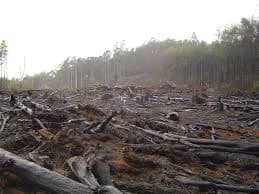
The Environment Ministers of the 27 EU countries have agreed to a ban on the import of food products from deforestation countries. From 2030 onwards, the import of soy, beef, palm oil, timber, cocoa, and coffee will be prohibited if their cultivation and production contribute to deforestation.
The ban not only concerns deforestation but also covers “forest degradation” and “structural transformation of primary forests.”
By doing so, the ministers confirm a similar earlier proposal from the European Commission. The compromise now adopted by the EU countries also makes it possible to block derived products such as leather, chocolate, and furniture originating from threatened natural areas.
Promotion
The Environment Ministers also want specific requirements for soy in animal feed. EU countries still need to agree with the European Parliament on these last two compromises.
European consumption accounts for 16% of global deforestation, making the EU the second-largest destroyer of tropical forests after China, and before India and the United States.
In practice, importers will soon have to indicate where, how, and with which raw materials their imported products were made. Traceability must be demonstrated to EU authorities using geo-locations and satellite images. This is also intended to apply to the origin of crops.
The required level of verification was developed by France. According to Paris, the original proposal has also been “significantly strengthened” by taking into account human rights and the interests of indigenous peoples and small producers.
Environmental organizations have criticized “shortcomings” of the agreement, because other important products such as corn, pork, and poultry are not included in the new ban.
The American organization Fern welcomed the inclusion of indigenous peoples’ rights “on paper,” but fears this protection will “not be respected” due to a lack of sufficient controls.