

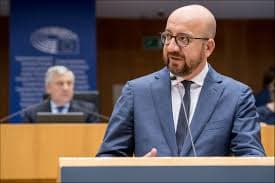
The European Union must make cuts to the Agricultural Budget in the coming years, according to EU President Charles Michel. He wants to reduce the EU budget for 2021-2027 from 1100 billion to 1074 billion euros, partly by cutting agricultural expenditures, as the Netherlands desires.
Michel did not specify detailed amounts for the cuts yet, but he may be referring to the reserves of the rural development fund. Furthermore, he allows the Netherlands to maintain the ‘temporary’ billion-euro reduction on its annual contribution for another seven years.
The EU president’s proposals address the wishes of Dutch Prime Minister Mark Rutte, who is obstructing the EU budget and the corona recovery fund within the EU. Michel hopes that with a slightly lower multiannual financial framework (MFF) than that proposed by the European Commission, an agreement can be reached among the heads of government on these two financial dossiers at the upcoming summit.
Promotion
It remains uncertain whether Michel’s new compromise can get the EU heads of state on the same page, and it is also to be seen whether the European Commission under Ursula von der Leyen will accept it. The European Parliament has already made clear that it considers the current 1100 billion proposed by Von der Leyen as the absolute minimum and actually wants even more. However, EU practice is that heads of state always have the final say.
Michel maintains the ratio in the corona aid package of two thirds subsidies and one third loans for the southern EU countries most heavily affected by COVID-19. The fund is to include 750 billion euros. Prime Minister Rutte and the three other ‘frugal’ countries Sweden, Denmark, and Austria, insist that this support should consist only of loans and be conditional on reforms.
After presenting his compromise proposal, Michel said he “respects the sensitivity of this issue among member states. This is a difficult matter. But I trust in political courage.” EU President Michel also proposes the establishment of a reserve fund of 5 billion euros for countries, such as the Netherlands, most affected by the United Kingdom’s departure from the EU.
The compromise proposal, which was developed after weeks of intense consultations with divided member states and a visit to Rutte, appears to address a number of Dutch concerns and demands. Another important point for The Hague is also included. Michel wants to tie subsidies to member states to rule-of-law conditions, allowing subsidies to be withdrawn from obstructionists such as Hungary or Poland if necessary.
In a speech on Wednesday, Merkel called on Members of the European Parliament to act responsibly and be willing to compromise, as the EU is facing momentous decisions for the coming years. She also said she expects a sober and honest approach from the heads of government, who will meet in a ‘financial summit’ in one week.
Heads of state such as Merkel and French President Macron, as well as the European Commission, want to allocate hundreds of billions as soon as possible, but the four obstructing EU countries are not yet resigned to this. Behind the scenes, there are intense diplomatic and official consultations regarding the compromise-of-a-compromise now presented by the EU presidency.