

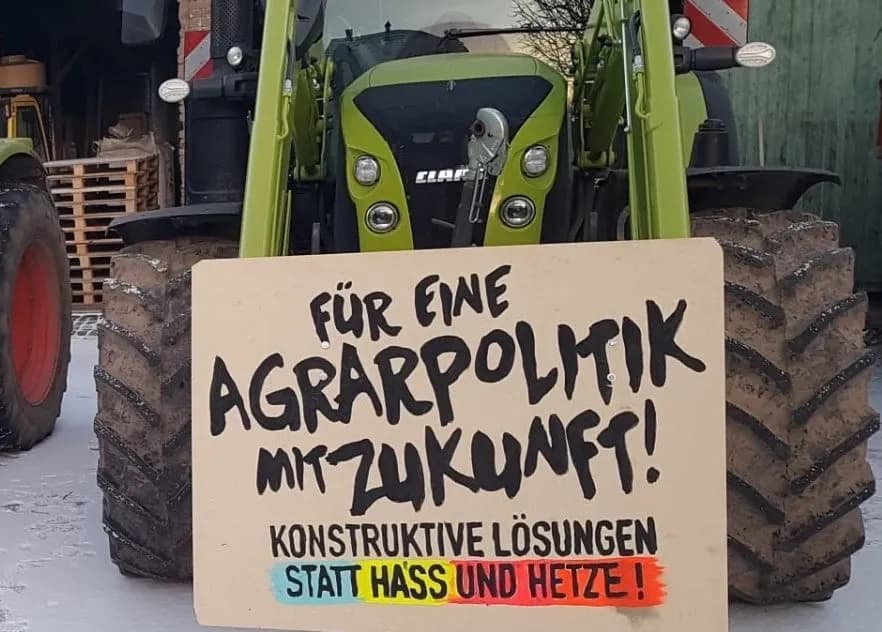
"This is a first concrete policy response to address the concerns of farmers about their income," the Commission says. President Ursula von der Leyen wants to grant farmers flexibility at a time when they face multiple challenges.
The farmers respond skeptically to the announcement. They call it a goodwill signal, but say much more will be needed than this. Postponing it for a year is procrastination, says a Belgian farmers' leader.
The rule regarding fallow agricultural land has been part of European agricultural policy for several years but has not been implemented until now. The measure was designed to allow arable land to rest and thereby improve biodiversity. The war in Ukraine forced the European Commission to postpone it two years ago, fearing that food supply could be jeopardized.
Promotion
Farmers wishing to claim European subsidies must also use part of their farmland to grow nitrogen-fixing crops – such as lentils – so-called catch crops. Many European farmers also see this EU measure as an infringement on their daily practices. They view it as a symbol of the increasingly strict rules imposed by the European Union.
A European summit is scheduled in Brussels on Thursday. Farmer protests and European agricultural policy are high on the agenda. European government leaders still need to give their approval before the postponement is final. Belgium and France are already strong proponents.
The European Council will also focus on negotiations with Hungarian Prime Minister Viktor Orbán. In December, he vetoed 50 billion euros in aid to Ukraine. Military support for Kiev is also on the agenda. Five European leaders, including the presidents of Germany and France and Dutch Prime Minister Mark Rutte, jointly called in an open letter to continue support for Ukraine.
"At the start of 2023, the European Union committed to delivering 1 million shells to Ukraine by the end of March 2024. The harsh reality is that we have not met this target," the open letter in the ‘Financial Times’ also states.