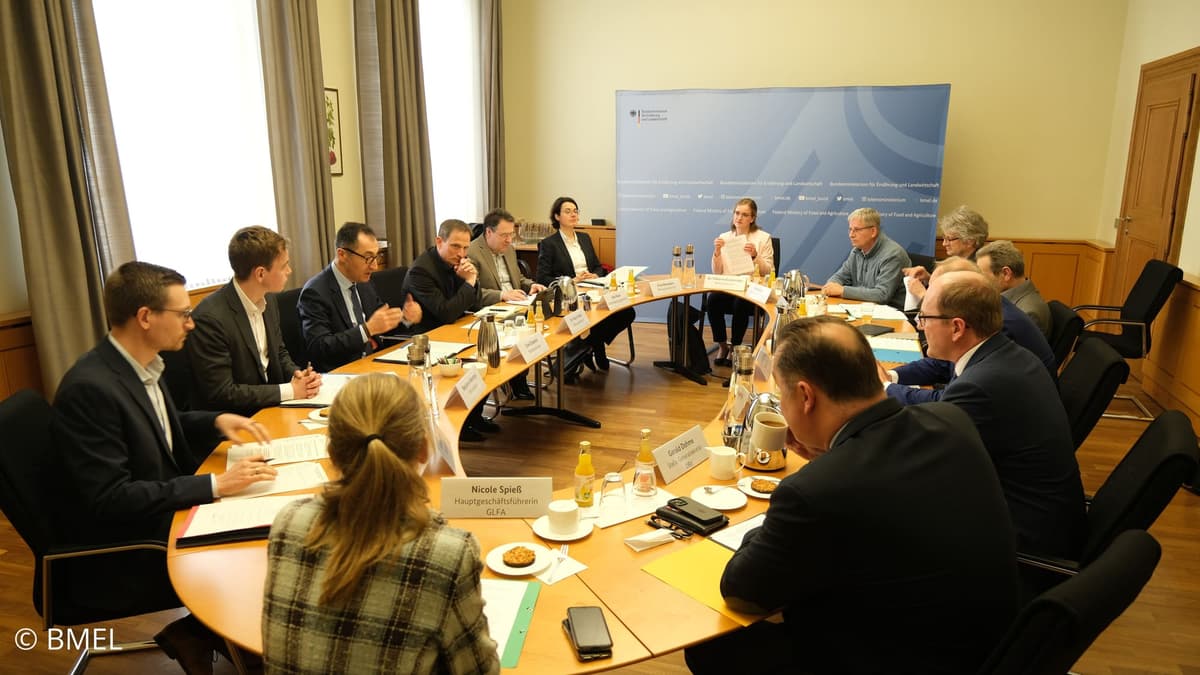
After the recent farmers’ protests (and on the eve of the European elections in June!), the European Commission wants to allow relaxation of the Green Deal rules. In Germany, the government and agricultural associations are already working on an agreement to reduce paperwork, regulations, and procedures for farmers.
The European Commission’s proposal contains some corresponding sensible suggestions, Özdemir said. However, some Brussels proposals should be revised, according to him. “Farmers want to be out in the field or in the barn, not sitting at a desk. But that must not mean that reducing bureaucracy equates to lowering environmental ambitions.”
According to Özdemir, healthy soils and better biodiversity are prerequisites for sustainable, healthy agriculture: “We must consistently pursue the Green Deal and not just focus on the short term.”
Dutch MEP Bas Eickhout (GroenLinks) is also critical of the proposed revisions: “This symbolic measure ignores the real problems and solves nothing. Nature is further deteriorating and farmers are digging themselves deeper into an agricultural system without a future.”
Farmers in Europe receive tens of billions in income support annually. To qualify, they must meet ‘good agricultural and environmental conditions’, such as preventing erosion, crop rotation, and allowing space for hedgerows. These conditions, established in 2022, are now being removed.
Eickhout, who is co-lead candidate for the European Greens in the upcoming elections, said: “The only green highlight from the recent agricultural reforms is now being reversed.” Regarding farmers’ income, Brussels would have been better off capping agricultural subsidies. Eickhout pointed out that still 80% of these subsidies go to 20% of the largest agricultural companies.
Critics say the Commission’s proposal contradicts the major report on European climate risks presented last week. Researchers conclude that Europe is unprepared for climate change and that there are significant risks for nature and food supply.
“Fortunately, in the Netherlands there are more and more farmers making their businesses future-proof by becoming more sustainable,” said MP and agriculture spokesperson Laura Bromet of GroenLinks-PvdA. “They benefit from European policies that encourage sustainability. This rollback by the European Commission actually worsens the competitive position of sustainable farmers.”
“Dutch agriculture is hopelessly behind on its own nature and climate targets,” Bromet continued. “The right-wing cabinet currently being formed will use these Brussels proposals to also weaken environmental goals and roll back policies in the Netherlands. This is much worse for farmers than helping them become sustainable.”
Now that the European Commission has presented the measures, both the European Parliament (March 19) and the Agriculture and Fisheries Council ministers (March 26) must consider them. The agriculture ministers have already said by majority that they support proposals in this direction. But it is still unclear whether this will lead to shifts within the agricultural budget, and whether the required qualified majority among the 27 EU countries will be achieved.