

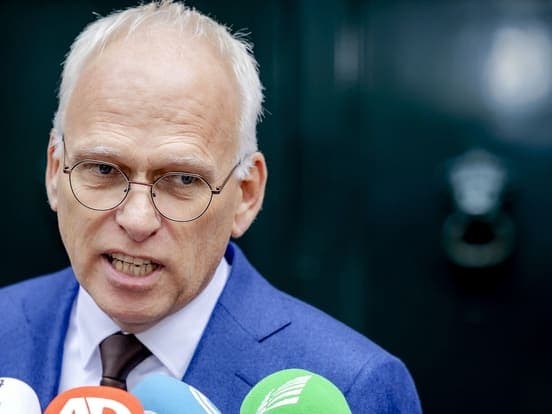
Together with several other EU countries, Adema once again pleaded on Monday at the Agriculture Council in Luxembourg (so far unsuccessfully) for the SUR pesticides proposal from the European Commission, but a large number of Eastern European countries are still resisting it.
To break this deadlock, Commissioners Frans Timmermans (Climate), Virginius Sinkevicius (Environment), and Stella Kyriakides (Food Safety) have conducted an additional study over the past six months at the request of the hesitant Agriculture Ministers into the possible consequences of a proposed halving of chemistry in agriculture. The study shows, among other things, that it only has real consequences for a few small crops (and hardly for grains or maize).
It is also now clearly acknowledged that the use of chemicals will remain permitted in extreme necessity, provided that farmers adhere to the eight-step process of the already existing (but not always observed) integrated pest management (IPM).
Promotion
Moreover, outgoing chair Sweden has introduced two compromises whereby the substantial reduction only applies to health-threatening 'dangerous' substances, it will apply to a smaller area (75% instead of 90%), and that a usage ban will only come into effect for public spaces (parks, green areas, sports fields, etc.). A calculation formula based on kilos per hectare is likely to be used, but this is not yet certain.
This supplementary study is intended to be presented next week (July 5). But since the Agriculture Ministers have not yet formally agreed, it is unclear how and when this 'still lingering proposal' will be finalized.
Next week, a proposal is also expected to be presented to allow gene technology (CRISPR-Cas) on a limited scale. Agricultural organizations are very much in favor, but Commissioner Timmermans said last month that if the ministers or parliament reject and block the nature restoration law or pesticide reduction, then this new gene technology will also not be needed. Adema says it is 'ready for use and we can start with it tomorrow.'
After the meeting, the minister said he had the impression that some hesitant colleagues seem to be shifting. They have instructed the new (temporary) EU president, the Spanish Agriculture Minister Luis Planas, to push this SUR pesticide proposal forward as quickly as possible.
Adema further said that Dutch growers, breeders, and farmers should not only be forced by threatened reductions to switch to 'green' crop protectors but also be encouraged with subsidies, training, and practical assistance. He pointed out that especially greenhouses in the Westland and bulb cultivation on sandy soils will face stricter rules. 'We see it in water quality, certainly not only in the Westland. Far too much of that stuff is simply entering our nature.'
He also said that in the Netherlands, the Ctgb has recently been prioritizing the approval of nature-friendly products. 'In the past, there were many more applications for chemical agents than for natural variants. All applications were handled in order of receipt. If there was a nature-friendly one in between, it had to wait its turn. Now we process them alternately,' Adema clarified.