

The stricter criteria are part of the package that Climate Commissioner Wopke Hoekstra will soon present at the international climate conference COP28 in Dubai.
New trucks will only be allowed to emit 45% of the current CO2 levels by 2030, and ten years later this must be reduced by 90%. The new rules will also apply to medium-sized trucks (over the maximum 5-ton mass) and small passenger vans. The environment ministers of the 27 EU countries want to encourage the auto industry to accelerate the transition to producing cleaner and/or electric vehicles.
The environment ministers acknowledge that for some types of transport vehicles, relatively few are produced and sold annually, resulting in hardly any market mechanism to prompt manufacturers to switch to entirely new types.
Promotion
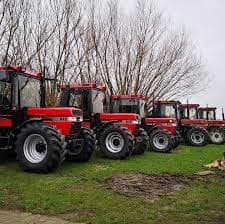
Therefore, alongside tractors and agricultural vehicles, the list of exceptions also includes garbage trucks, fire trucks, ambulances, military (tracked) vehicles, and other specialized transport.
A proposal to make all bus transport in the EU completely nitrogen-free by 2030 was postponed by five years at the suggestion of France and Estonia, and will initially only apply to city buses and not regional transport.
The goal is to further reduce CO2 emissions in the road transport sector with targets for 2030, 2035, and 2040. Similar plans are also being developed for shipping and aviation. These sectors must also significantly cut their nitrogen emissions within the EU. The impact of the stricter emissions standards will be assessed mid-term (in 2027) by the (new) European Commission.