

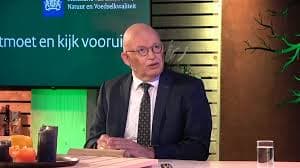
Agriculture Minister Henk Staghouwer has taken the lead in the EU for the development of a new environmentally friendly fertilizer industry that processes building materials from natural manure. Many EU countries responded positively, and the European Commission will now quickly explore how to make this possible.
The Netherlands advocates processing animal manure into natural fertilizer as an alternative to chemical use or spreading wet manure. By processing animal waste and bio-waste on an industrial scale into pellets or powder for a new type of dry, spreadable fertilizer, less chemical fertilizer needs to be used.
This would also make the European Union more ‘self-sufficient’ and less dependent on the import of expensive Russian fertilizer. Crop production can thus be maintained even if fertilizer becomes too expensive or unavailable. This solution does not lead to increased nitrogen use on a field.
Promotion
The Dutch minister pointed out at the EU Agriculture Council that developing such a residual stream could create a new agricultural business model. Better local use of animal manure not only benefits the environment but also improves economic advantages for livestock farmers and arable crop producers.
“Today we have taken a huge step. We have been conducting research and pilot projects for years, and now it seems it will really happen. All EU countries have realized that we must become less dependent on our fertilizer,” Staghouwer said to Dutch reporters in Brussels after the ministers’ meeting.
The Russian war in Ukraine has, according to Staghouwer, clearly shown that European agriculture is heavily reliant on imports of natural gas, critical raw materials, and fertilizers, especially from Russia, Belarus, and Ukraine.
But with the ever-increasing cost of foreign fertilizer, it is becoming financially more attractive to make innovative domestic investments. The Dutch proposal also fits with the Farm to Fork strategy (less chemicals and fertilizer) to further strengthen the sustainable development of the agricultural sector.
Investments in these kinds of new industrial sectors are substantial and generally have a return on investment of 10 years or more. To encourage the sector to invest, deviations from current rules must be long enough to allow producers to recoup their investments, Staghouwer argued.
Last year, the Netherlands already raised the idea of a new industry for ‘natural fertilizer’ at the Agriculture Council, arguing that European rules promote the reuse of recovered raw materials. This would require a deviation from the Nitrates Directive.
This is usually a contentious issue in the Nitrates Committee in Brussels, but the Netherlands and a growing number of other EU member states apparently believe that ‘changed circumstances’ now apply. Staghouwer thinks the European Commission should allow this in the medium term (5–8 years).
Given the urgency and the need for a short-term solution, the Netherlands is therefore asking the EU for permission to already deviate from some rules now, provided that the new fertilizers made from recovered nutrients continue to meet the existing European minimum criteria, the so-called ReNure criteria in nitrate-sensitive zones.