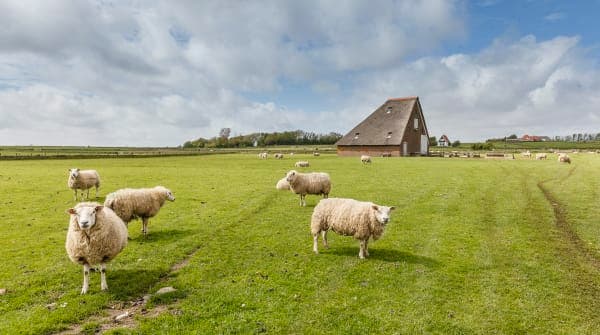
Together with Germany and Belgium, where the virus has also recently reappeared, he has urged pharmaceutical companies to develop a new medicine. In the Netherlands, several thousand sheep farms have already been infected.
Adema said at the EU Agriculture Council in Luxembourg that he fears for the survival of sheep farming in the Netherlands. Currently, some thousands of sheep are dying every day from the disease. Not only are many sick sheep dying, but also far fewer lambs will be born next spring. Sick sheep do not breed. The disease previously appeared in 2006-2007. Vaccines were then available, but they no longer work because this is a different variant of the virus.
Minister Adema stated that it is of great importance that pharmaceutical companies develop and produce vaccines against this specific type of bluetongue (serotype 3). This is crucial for safeguarding animal health and limiting the damage.
The problem is not confined to Dutch national borders and therefore requires a European approach. That is why we are working more closely together with Belgium and Germany and have asked for the EU's assistance, Adema said.
He wants to engage in talks with pharmaceutical companies in the near future. Which companies these will be is not yet known. The mosquitoes that transmit the disease are less active during cold winter months. But around May (the new breeding season), Adema fears a new peak. The vaccine must therefore be ready before spring.
The government cannot compel pharmaceutical companies to produce a vaccine but can encourage them with investment subsidies. The cabinet is also considering whether it is possible to provide financial support to sheep farmers. Bluetongue is considered a (self-borne) business risk. This means the government cannot compensate livestock farmers.
No preventive cullings are taking place (yet). When these do occur, farmers can be compensated. Adema says he will continue to assess what is possible. For now, a new vaccine is the only way to support sheep farmers and prevent a possible outbreak after winter, he believes.