

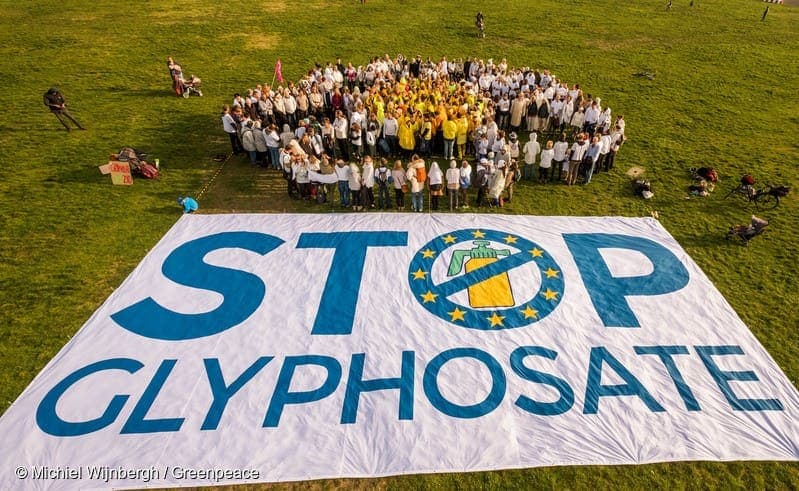
The Dutch House of Representatives has requested such a stance through a motion, but Minister of Agriculture Piet Adema remains cautious and says he wants to thoroughly study the new EU proposal first.
To prevent the use of glyphosate in European agriculture and horticulture from having to be temporarily extended for another year, the European Commission is this time sticking to a strict timeline. This will be initiated on Friday, September 22, in the Standing Committee on Plants, Animals, Food and Feed (SCoPAFF).
“I will only take a definitive position after receiving the proposal. I will also seek advice from the Board for the Authorization of Plant Protection Products and Biocides (Ctgb),” Adema explains. As a result, the topic is not on the agenda for the monthly Ministry of Agriculture ministers’ meeting in Brussels.
Promotion
Adema informs Parliament that the outgoing cabinet will take a position on the choice presented by the European Commission “afterwards.” In that consideration, the adopted parliamentary motion will, of course, play a significant role, he says.
In July, Brussels already sent a draft to the EU member states for the extension of the use; the current authorization expires at the end of this year. The SCoPAFF committee acts as an expert advisory body, not as a political decision-making body. From the proposal to the committee, it appears that the European Commission wants to allow the use to continue for a period of 5 years.
In the SCoPAFF meeting at the end of September, the EC proposal will be discussed for the first time. No vote will take place there. The Dutch representative will indicate that The Hague wants to study the proposal further before taking a substantive position.
“Of course, the Netherlands will indicate at this meeting that Parliament has requested the cabinet to vote against the renewed approval of glyphosate. The vote on the renewed approval of glyphosate is expected to take place (in the EU Agriculture Council – editor) on October 13. I will inform your House about my position prior to this vote.”
It is already known that Germany and Austria will vote against. Both a ban and continuation require a “qualified majority”: at least fifteen of the 27 EU member states representing at least 65 percent of the total population.
The European Commission bases the re-approval on a positive report from the European Food Safety Authority (EFSA) and a risk assessment by the Chemicals Agency (ECHA). After an exceptionally long evaluation of numerous studies, they concluded that glyphosate does not pose a risk to the environment or human health. The key question now is whether the SCoPAFF committee finds this sufficient.
In theory, the European Agriculture ministers could still opt for a shorter, temporary (continued) authorization, for example two or three years. In that case, the issue effectively gets postponed to the new European Commission after the elections next June. Such a decision would require approval from the European Parliament.
Recently, the ENVI Environment Committee of the European Parliament showed that supporters and opponents (from right to left) are roughly balanced, with the (divided) liberal group able to sway the outcome. The Agriculture Committee is in favor. This also applies to approving new GMO techniques like CRISPR-Cas. The Netherlands supports this, but certainty on this within the EU has not yet been reached.