

The International Court of Justice (ICJ) in The Hague rejects all objections from Myanmar against an international trial over genocide against the Islamic Rohingya population. The UN court will now proceed to the substantive hearing of the case, a process that will take years.
Myanmar, governed by a military junta since a coup in 2021, argued that the African country Gambia, which filed the lawsuit, had no interest in the case and was not authorized to do so. However, the highest court of the United Nations stated that all countries that signed the 1948 UN Genocide Convention can bring cases before the court.
Myanmar, like other Southeast Asian countries, is a Buddhist nation but has a large Muslim minority in the northwest, bordering Bangladesh and India.
Promotion
Gambia became involved after a Gambian former minister, who was previously a prosecutor at the UN tribunal for Rwanda, visited a Rohingya refugee camp in Bangladesh in 2019. He said the genocide in Myanmar showed many similarities with the mass murder in 1994 of nearly one million Tutsis in Rwanda.
Now that the ICJ Court has declared itself competent to actually take up the genocide allegations against Myanmar, the Netherlands and Canada have also joined Gambia’s charges.
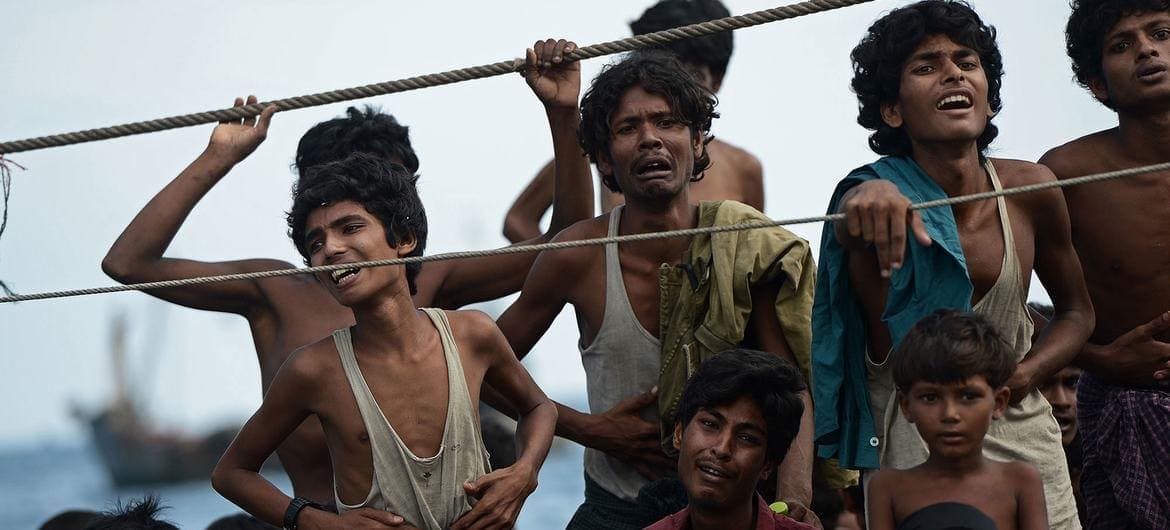
A UN investigative mission concluded that a military operation by Myanmar’s army in 2017, which forced 730,000 Rohingya to flee to neighboring Bangladesh, involved “genocidal acts.” Myanmar denies genocide and rejects the UN findings, saying the crackdown targeted Rohingya rebels.
Although the rulings of the Hague court are binding and countries generally comply, the ICJ has no way to enforce its decisions.