

The European Commission insists that something must be done about air and soil pollution caused by the livestock, poultry, and pig farming industries. A spokesperson for the Commission said that the objections from the Agriculture Committee against expanding the Industrial Emissions Directive (IED) are being greatly exaggerated.
Brussels wants to include livestock farming with more than 150 animals under the directive and tighten the criteria for pig farms and poultry farms so that more businesses are covered. However, the European Commission is willing to make compromises on certain parts. The Commission denies that this is an imposed regulation: everyone has had the opportunity to participate in discussions.
The ENVI Environment Committee of the European Parliament agrees that the polluter should pay in these sectors as well. The AGRI Agriculture Committee opposes the current proposals (like many EU governments), but the Greens say they will come forward with compromise texts in the upcoming trilogue negotiations.
Promotion
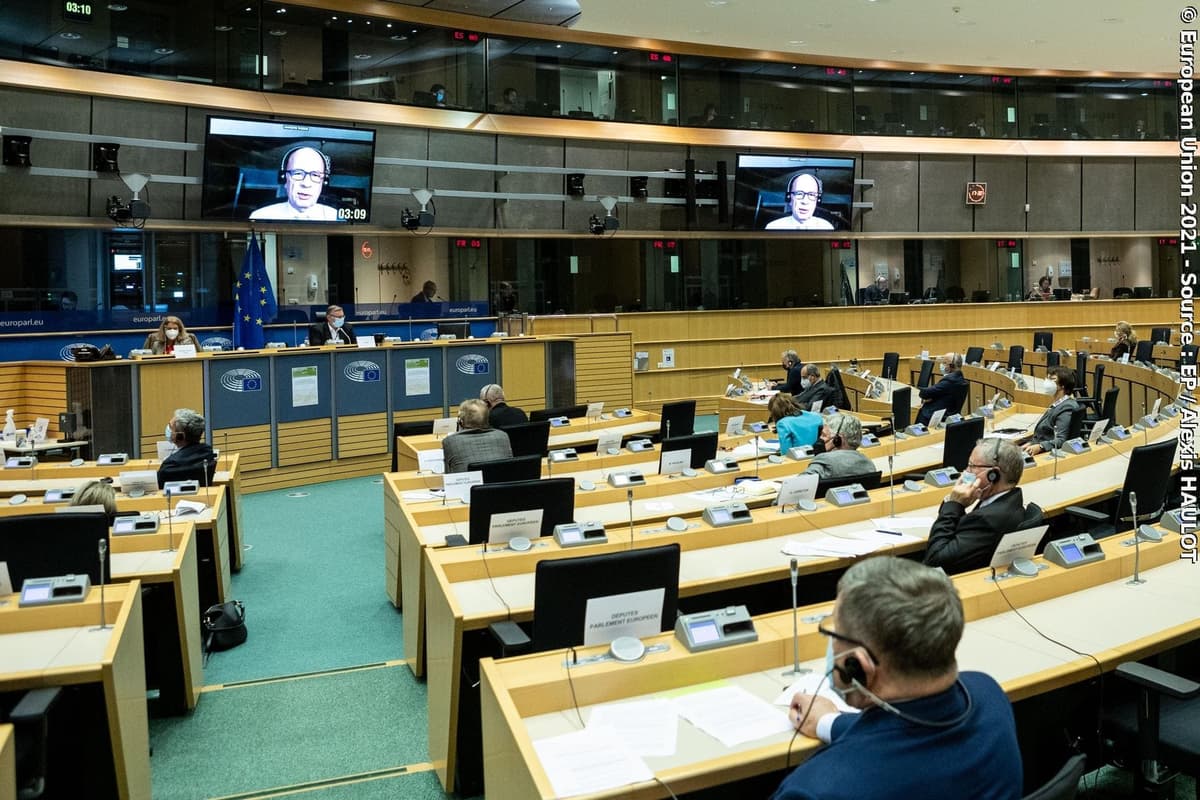
At a joint hearing, a spokesperson for the European Commission emphasized that the focus on livestock concerns only the very large farms, at most about fifteen percent. However, several Members of the European Parliament, including the Dutch CDA member Annie Schreijer-Pierik, pointed out that in some countries with intensive livestock farming, 150 animals do not represent a very large farm at all.
Almost all AGRI committee members also stumbled over the term “industrial” in the name of the Directive, as if those three sectors were large industries. The Commission’s spokesperson could only note that this name for the IED has existed for many years, and it is now applied to a slightly larger part of livestock farming. Moreover, the Commission more or less turned the ball back to the MEPs by noting that taking no action is not a solution.
A common argument against stricter environmental requirements for agriculture is that the sector has already reduced pollution significantly in many areas. The EPP Christian Democrats therefore argue that new environmental rules should be put on hold for the time being. But the Commission points out that nitrate pollution has not been reduced for decades.
The main objective of the IED (which will require the sector in a few years to use the most modern available techniques) also faces considerable criticism. It was noted that this will mean something very different for a small pig farmer in Cyprus versus a large pig farm in Germany or Spain.
The Dutch SGP member Bert-Jan Ruissen urged his colleagues to consider a very different approach to environmental policy in agriculture: that the EU no longer prescribes a means or a technique but a goal. The farmer would then, within the law, find the means to achieve that goal themselves. “That does mean that we must also include animal welfare, environment, and climate in the calculations of those goals,” he warned.