

And they must thoroughly discuss their negotiation strategy with each other beforehand so that they are not – as happened in 2018/2019 – sidelined by heads of government, ministers, and the European Commission.
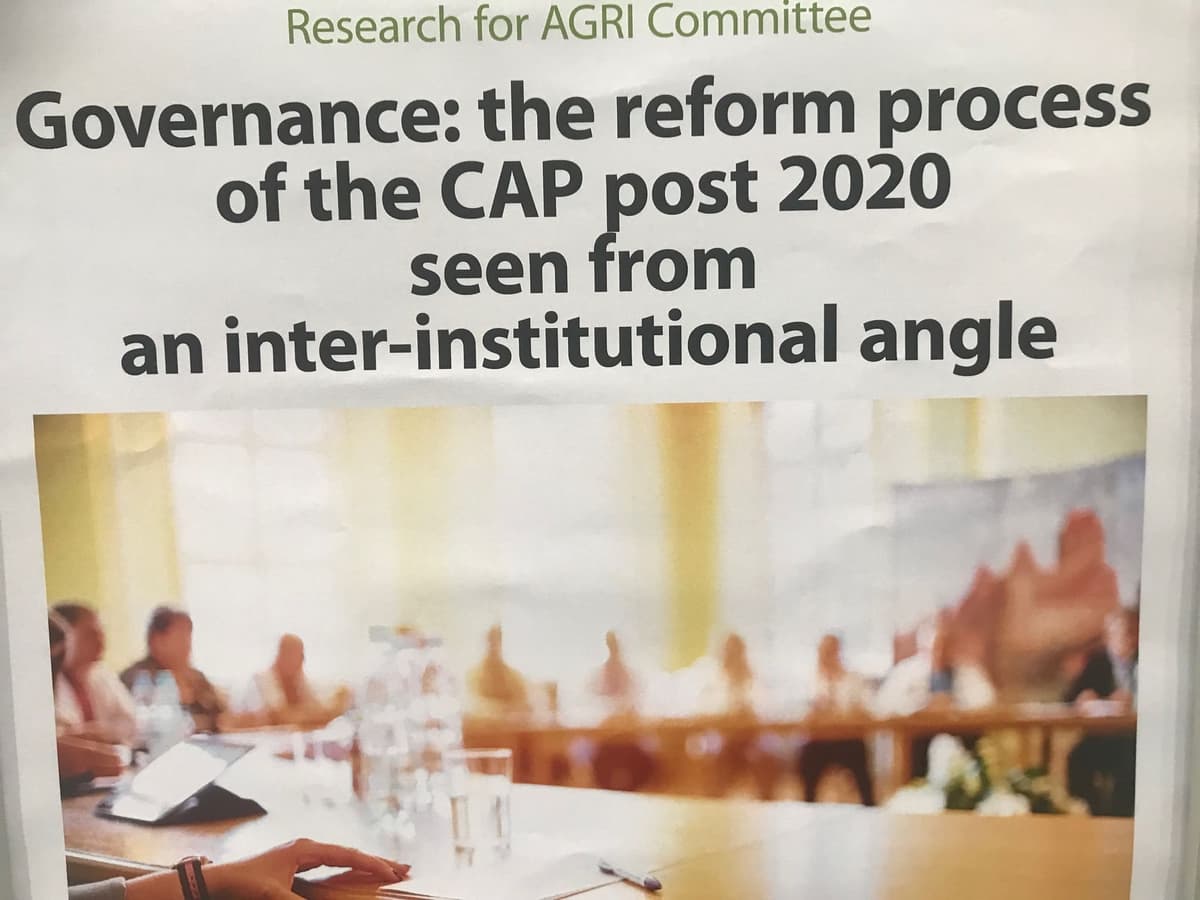
That is the conclusion of a scientific EU study, commissioned by the Agriculture Committee of the European Parliament, which examined how the new common agricultural policy (which starts next year) was established back then, and what lessons can be learned from it.
The negotiations lasted over three years, after (the previous) agriculture commissioner Philip Hogan introduced amendment proposals in 2018 shortly before his departure. Those proposals became outdated because that year a new European Parliament was elected, and at the end of that year a new European Commission took office.
Promotion
Furthermore, the Von der Leyen Commission presented a radical package of Climate Plans (the Green Deal and the Farm to Fork strategy) which differed significantly from what Hogan had brought forward. Moreover, the parliamentary committees for Agriculture (AGRI) and Environment (ENVI) received shared responsibilities for parts of the agricultural package.
Not only did the two committees have rather different wishes and demands, but there were also major contradictions between what the EU governments were willing to allow and what the EU commissioners wanted to achieve. Ultimately, the heads of government and finance ministers determined how much (or how little) money was available for new policy.
In veiled terms, the study concluded that EU politicians in the three-party negotiations (the trilogue) kept hammering on their overly long wishlist for too long, and as a consequence, some Commissioners and some EU governments ran the show with their compromises.
Partly, this was due to the fact that Members of the European Parliament do not have their own “civil service” at their disposal, whereas the Commissioners and ministries do.
Not only did the spokespeople of the three large coalition groups (Christian Democrats, Social Democrats, and Liberals) acknowledge that they had lost control, but also the left- and right-wing opposition (Greens and ECR) said that next time things must be different and better.
Bert-Jan Ruissen (SGP) criticized that the European Commissioners, with their Green Deal and Farm to Fork plans, did not introduce legal texts but political wishes and desires, and that as a result the Commission became a third negotiating party at the table – instead of a governance service provider.
One of the conclusions of the scientists is also that the newly introduced national strategic plans in the coming years can serve as a good interim indicator to detect flaws in the new CAP, and that EU politicians can already start compiling a list of improvements.