This week, the European Commission finalized the easing of four Green Deal rules, going against the advice of scientists who say agriculture must become more sustainable. The new approach ends the annual requirement to leave parts of arable land fallow to promote biodiversity. Also, compulsory crop rotation every few years will no longer be required.
These measures were drafted in 2022, shortly before the Russian war against Ukraine broke out. That war led to fears of reduced food availability, which is why these rules have not yet been implemented. In that sense, little will change for the farmers.
Additionally, the requirements for cultivating diverse plants, protecting soil from erosion and leaching, and protecting grasslands in nature areas will be noticeably eased. The European Commission also announced it wants to relax rules on the use of pesticides and fertilizers.
It is not yet clear whether there will be any changes or expansions to EU agricultural subsidies. Many stakeholder organizations and farmers are pushing for this, but it depends on the overall EU budget. Significant cuts are expected in the coming years, partly because support for Ukraine will cost tens of billions.
For these latter changes, Brussels also needs the approval of the European Parliament, which is about to enter its election recess next month.
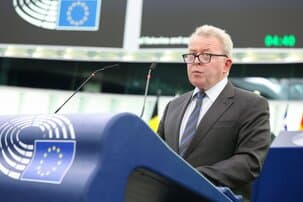
The proposed easing of environmental rules is labeled ‘too little and too late’ by various agricultural organizations. At the same time, there are protests from Greens and environmental groups. On Tuesday, Wojciechowski will discuss his proposals with the European Parliament’s agriculture committee, and a week later with the 27 Agriculture Ministers.
During a separate debate, the European Parliament's agriculture members will discuss ‘the European environmental goals for agriculture’ with Climate Commissioner Wopke Hoekstra.
Environmental organizations warn that weakening the standards will effectively abolish the already low ecological requirements for farmers. Greenpeace said the price for society as a whole would be too high. The European Commission is acting blindly and contrary to scientific facts, according to the WWF organization.