

Moreover, next month an EU-wide survey will be conducted among all European farmers allowing them to voice their complaints and submit ideas. Furthermore, in the medium term, three fiercely contested (small) production restrictions from the Green Deal and Farm to Fork strategy will largely be abolished.
The document published on Thursday, which will be discussed with the EU countries at the upcoming ministerial Agriculture Council on Monday, lists a series of short- and medium-term measures. These ideas were gathered last month from the 27 agriculture ministries and also respond to urgent letters and wish lists from agricultural umbrella organizations.
The survey among all farmers (via the internet) should provide a clearer picture by summer of the main administrative obstacles farmers face. The results will be included in a more detailed analysis to be published in autumn 2024. This will still be done by the current European Commission, but under the regime of a new European Parliament to be elected in June.
Promotion
Commission President Ursula von der Leyen and Agriculture Commissioner Janusz Wojciechowski believe that the EU criteria determining who qualifies as a farmer (the so-called conditionality requirements) should be simplified. These criteria also determine who is eligible for EU subsidies. Additionally, Brussels suggests the possibility of granting exemptions in certain cases to small farms (less than 10 hectares).
This exemption would significantly simplify the daily work of small farmers, who make up 65% of subsidy recipients, while environmental ambitions remain intact, since small farms cover only 9.6% of the areas receiving CAP support, according to the Brussels announcement. The number of on-farm inspections will also be halved, and there will be increased use of satellite imagery.
Brussels also wants to abandon a frequently criticized rule requiring fallow unused fields to be converted back to permanent grassland. Livestock farmers who had previously switched to farming due to disrupted market conditions would also more easily be able to revert their business back.
Furthermore, the Commission proposes clarifying the use of the concepts of ‘force majeure’ and ‘exceptional circumstances’. This legal concept enables farmers who cannot meet all requirements (such as in cases of severe droughts or floods) to avoid sanctions.
The Commission proposes to change these rules by mid-March to ensure that structural changes and the reduction in livestock numbers are taken into account, so farmers will not be penalized in their work and burdens will be eased because fewer areas will need to be converted to permanent grassland.
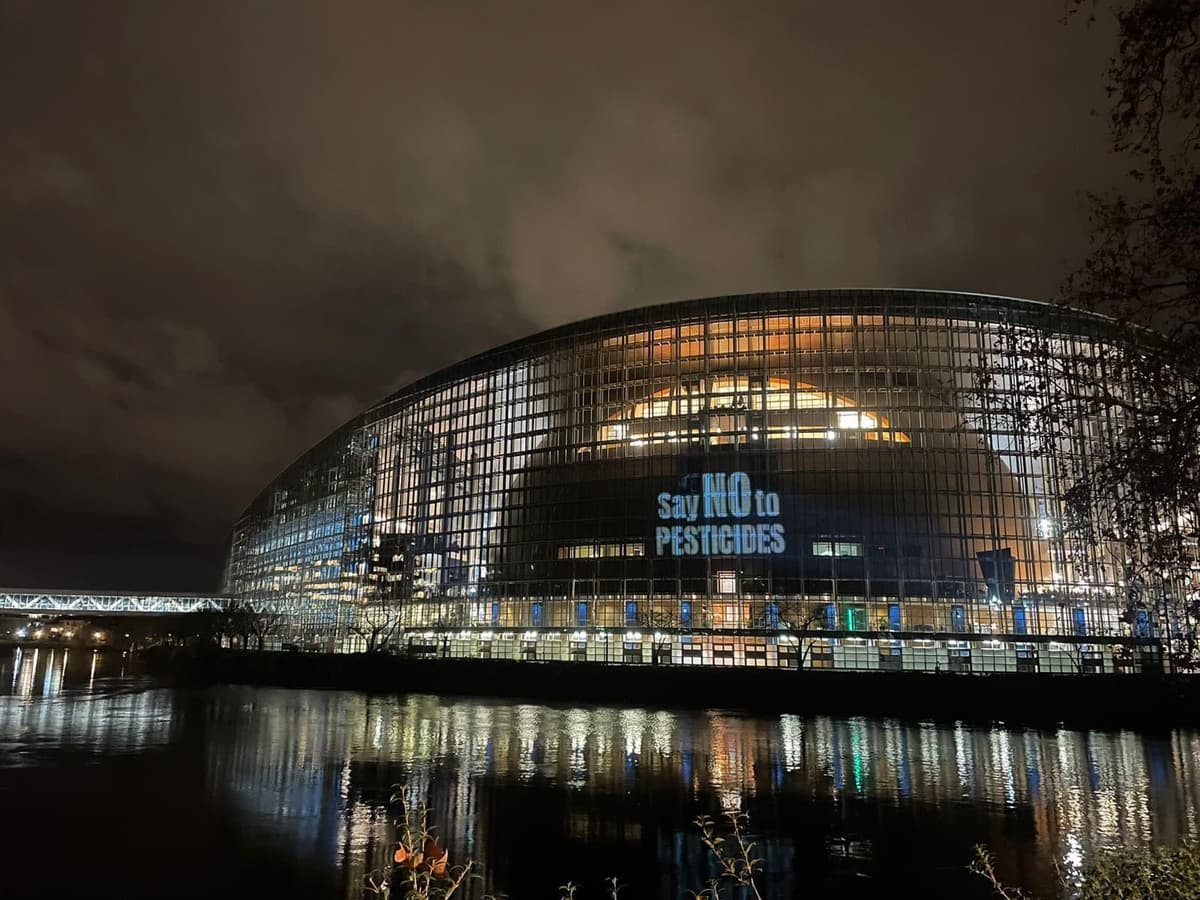
The Agricultural Committee of the European Parliament will hold an extraordinary committee meeting Monday evening in Strasbourg to discuss the ongoing protests against European agricultural policy. The newly presented approach will undoubtedly be high on the agenda.
In addition, at the very last moment, an extraordinary ‘communication’ from the European Commission was added to the agenda of the full European Parliament meeting on Monday evening.