

Once again, several explosive dossiers are on the European meeting tables that can easily lead to clashes between factions, politicians, and administrators. It is already clear that Climate+Environment and Agriculture+Food will once more stand in direct opposition to each other.
After the summer recess, new proposals from Commissioners Timmermans, Sinkevicius, and Kyriakides concerning ‘less chemicals and more organic farming’ will be discussed in Brussels and Strasbourg. Also upcoming are the new forest law, the revision of the Nitrates Directive, and a new land use regulation.
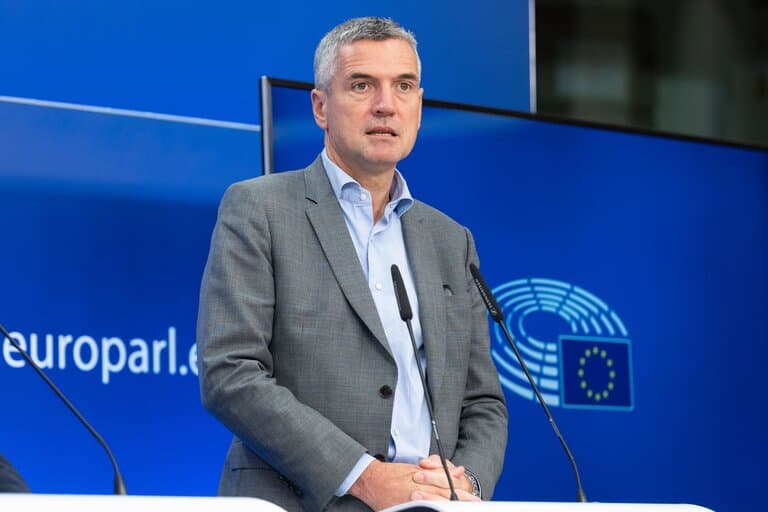
Member of the European Parliament Herman Dorfmann of the EPP group says that the course of the agricultural debate in recent months has ‘somewhat returned to reality.’ According to Dorfmann, the issue of production and food security had almost completely disappeared from view in recent years, but now—due to the Russian war against Ukraine—it is back at the top of the agenda, and rightly so.
Promotion
In recent months, Dorfmann has been one of the advocates for relaxing Green Deal provisions in the new common agricultural policy. As Agriculture Coordinator of the EPP group, he has been able to consult and direct this ‘behind the scenes’ with his party colleague Norbert Lins, chair of the agriculture committee.
Together, Dorfmann and Lins have served as a sounding board for AGRI Commissioner Janusz Wojciechowski, who is closely aligned with one of the Polish conservative political currents within the ECR group.
In an extended interview with the German agricultural press agency Agra-Europe, Dorfmann said that long before Russia invaded Ukraine, he had insisted that not only ecological but also economic sustainability is necessary. According to him, in recent years there was too much focus on environment, nature, and sustainability, with barely any attention paid to the (im)possibilities of agriculture and livestock farming.
Climate Commissioner Frans Timmermans recently lashed out at his political opponents in the agriculture committee. He accused them of misusing the faltering grain exports from Ukraine as a non-argument to instill fear in the European public about looming famine or food shortages elsewhere in the world, in order to further expand EU agriculture.