

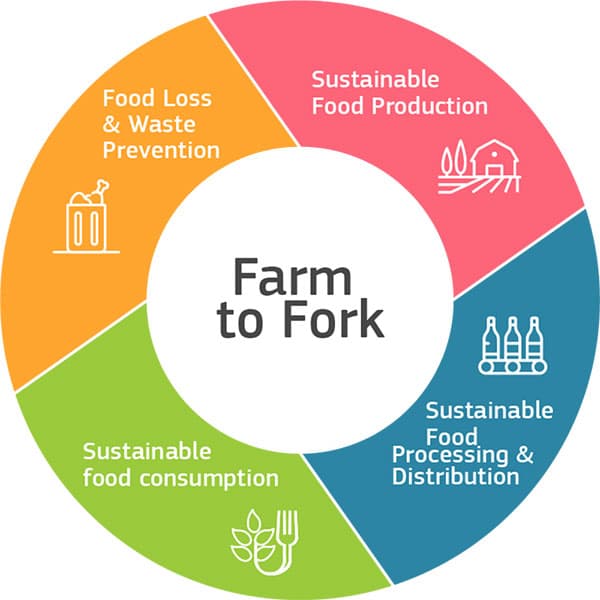
The Dutch members of the European Parliament voted very divided on a large package of amendments to a new European food strategy, farm-to-fork (F2F). For the Netherlands, this strategy will impact nitrogen emissions, which are the highest in Europe due to the large livestock population.
Only Jan Huitema (VVD), Mohammed Chahim (PvdA), and Anja Hazenkamp (PvdD) voted in favor. The two CDA members, Esther de Lange and Annie Schreijer-Pierik, abstained from voting, while Rob Rooken (FvD) and Bert-Jan Ruissen (SGP) voted against.
The Farm-to-Fork strategy proposes plans to reduce the footprint of livestock farming and increase the share of organic agriculture. The use of synthetic fertilizers and pesticides will also be reduced.
Promotion
Jan Huitema (VVD, Renew Europe) said that the initial plans did not sufficiently take into account farmers' practical realities. “That is why I am glad that, partly thanks to my contributions to this report, a clear signal is being sent to the European Commission. We must allow space for the diversity of agricultural entrepreneurs, focus on innovation, and base legislation on scientific knowledge,” Huitema stated.
The Dutch PvdA member Mohammed Chahim called the promotion of organic farming a positive development. It is important to help farmers become more sustainable and to promote and reward this.
Chahim emphasized that the Farm-to-Fork strategy must give adequate attention to small farmers. According to him, under the current system, they are unable to sell their products on the local market because the existing supply chain is so distorted. Large supermarket chains become wealthy from farmers’ products.
The strategy offers better protection for their products and encourages the sale of local, organic products. Chahim said: “The saying ‘what the farmer doesn’t know, he doesn’t eat’ applies to all of us. If you know where your milk comes from, it tastes a lot better.”
Additionally, the AGRI agricultural committee last week overwhelmingly approved the three new regulations that will together form the new Common Agricultural Policy.
During the vote, it appeared that both the conservative right-wing groups (ECR and ID) and the radical left opposition (GUE/NGL) supported the plans, as did the liberals (Renew) and the Christian Democrats (EPP) for the most part. The Greens voted against, and the social democrats (S&D) were divided. The final vote will take place in the November plenary session of the full European Parliament.
The text is expected to be approved by the plenary session, possibly during the November session.