

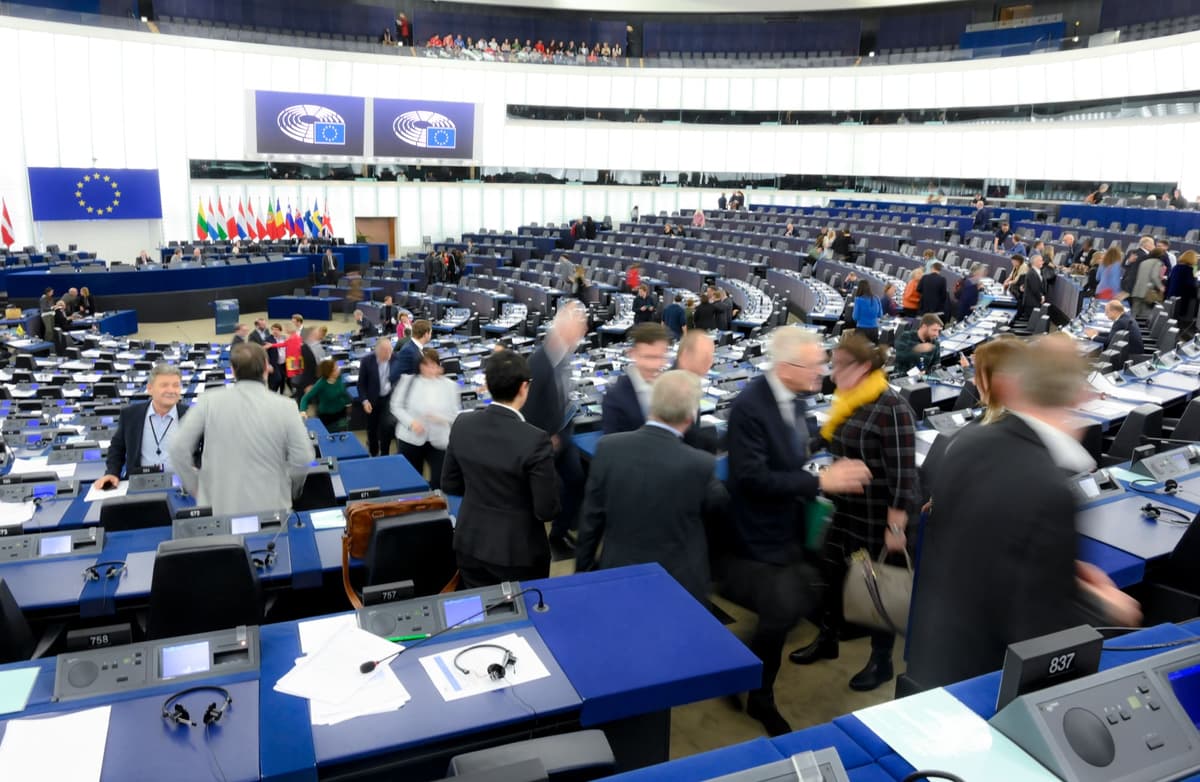
The Agriculture Committee of the European Parliament has responded positively to the slight increase the European Commission made in the Agricultural Budget but insists that new tasks must be funded with new money.
At the end of May, after persistent urging from the Agriculture Committee, the European Commission had introduced a slight increase in the multiannual budget, but this has since been rejected by the heads of state and government. Those leaders will meet again in mid-July, with the Netherlands and three other EU countries still posing significant opposition.
Their objections mainly concern the corona recovery fund, but because of this, the EU multiannual budget is not yet secured. A major stumbling block is the large amount of money needed for Vice-President Frans Timmermans’ Green Deal, including the farm-to-fork strategy, biodiversity, reduced pesticides, and more organic farming. And those hundreds of millions in an increasingly large reserve pot for rural development are very tempting…
Promotion
Measures of the European Green Deal must not be paid for from the current agricultural policy funds, it was reiterated in the committee meeting on Monday. The Agriculture Committee did acknowledge, however, that a “modernized and sustainable Common Agricultural Policy (CAP) will make a decisive contribution to the EU’s ambitious climate goals.” A significant portion of the CAP must support the EU’s climate objectives, but its achievement will greatly depend on adequate funding, the Agriculture Committee emphasized.
That extra money is highly unlikely for several reasons. Firstly, the European Commission has already improved the latest draft budgets. Furthermore, it is ultimately the heads of state who usually have the final say. And in most budgets, “old for new” is a very common principle: new policies can only proceed if money is “found” by discontinuing “old” policies. Additionally, several countries have long been known to believe there is far too much spent in the EU on (maintaining outdated) agricultural policy.
Moreover, it is far from certain whether the opinion of the Agriculture Committee is shared by their fellow parliamentarians on the Budget Committee, the Economic Committee, and the Environment Committee. That will only become clear in September, during the votes on the final budgets. By then, almost everyone will probably have long forgotten that the premiers and ministers applied the financial brakes in July.
In a non-binding resolution, adopted with 37 votes in favor, 8 against, and 3 abstentions, the Agriculture Committee insists that “the green transition, the extensive biodiversity plans, and the farm-to-fork vision must be financed with new funds and must not come at the expense of the existing CAP funding. Increased ecological requirements must always be accompanied by additional financial support, because farmers cannot be asked to do more with less money,” it states. They add that agriculture in the EU is the only sector that has already reduced greenhouse gas emissions by twenty percent.