

Reversing or stopping the Green Deal serves no purpose, as it is not legally binding legislation but merely a series of political plans. This is what Agriculture Commissioner Janusz Wojciechowski said in response to calls from European ministers and politicians to reconsider the European agricultural policy, the Farm to Fork food strategy, and the biodiversity strategy.
In an interview with Polish agricultural media, Wojciechowski points out that the Green Deal and the new CAP have been definitively approved by all EU countries and by a large majority in the European Parliament. According to him, the two strategies (Farm to Fork and biodiversity) are nothing more than guidelines, for which there is no reason to deviate.
This week, several factions will urge Wojciechowski to allow more flexibility in agricultural policy. Last month, a decision was already made to open the European emergency fund to support European farmers, and the requirement to leave four percent of agricultural land fallow has been postponed for a year. Many ministers and EU politicians consider this insufficient, but Wojciechowski disputes that.
Promotion
At the monthly meeting of the Agriculture Committee (Wednesday and Thursday) in Brussels, the ongoing Russian war in Ukraine will once again be a major topic. The ministers of nine Eastern European countries already requested earlier this month a 'cessation' of the Common Agricultural Policy, as it is supposed to come into effect starting next year (2023).
That start date is under pressure in eight of the 27 EU member states because there is still no agreement on their national strategic (agricultural) plan. As a result, Brussels cannot issue a final judgment, and the payment of their agricultural subsidies is at risk, says Wojciechowski. How this will turn out remains unclear.
Ten former Polish Ministers of Agriculture believe a European subsidy for collective fertilizer purchasing should be established, calling the 500 million euros from the emergency fund (for the entire EU) merely a drop in the bucket. They argue that a fertilizer fund would require ten times that amount.
The European Commission and most EU countries believe the focus should be on developing new 'natural' fertilizers, such as the recently presented natural fertilizer plan by the Netherlands.
Spanish Minister Planas also believes Wojciechowski should ensure that no new environmental criteria are imposed on agriculture for the time being. He referred, among other things, to plans by Commissioners Timmermans (Climate) and Vincevicius (Environment) for a new 'land use tax' and stricter emission standards for large livestock farms.
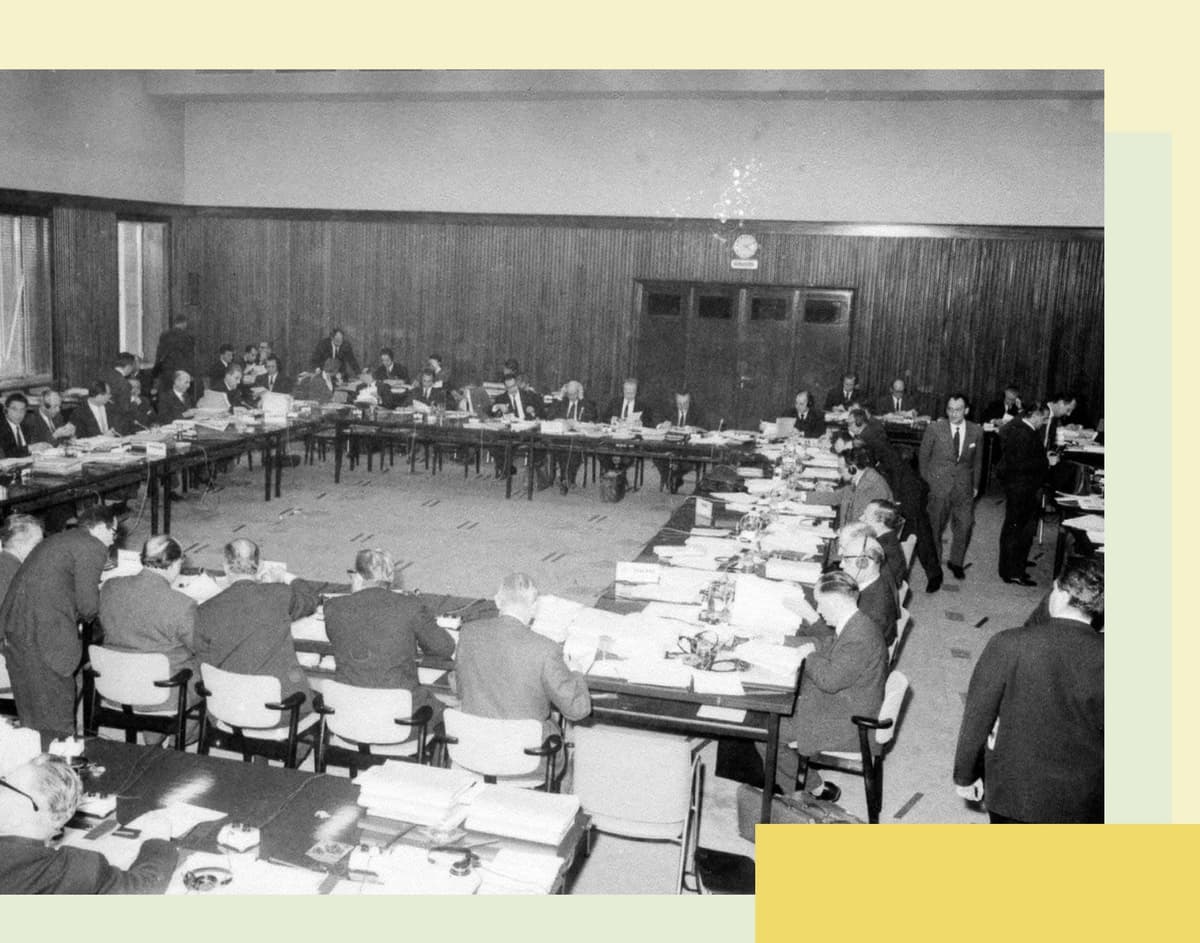
The AGRI Agriculture Committee will also reflect on the 60th anniversary of the European Common Agricultural Policy, which was initiated in 1957. The current treaty came into effect on April 20, 1962.
To celebrate the 60th anniversary, the European Commission has developed a special exhibition that was on display on April 7 during the ministers’ meeting in Luxembourg. It outlines the history of the CAP from its origins to present policy, featuring testimonials from farmers across Europe and the objectives for the future.