

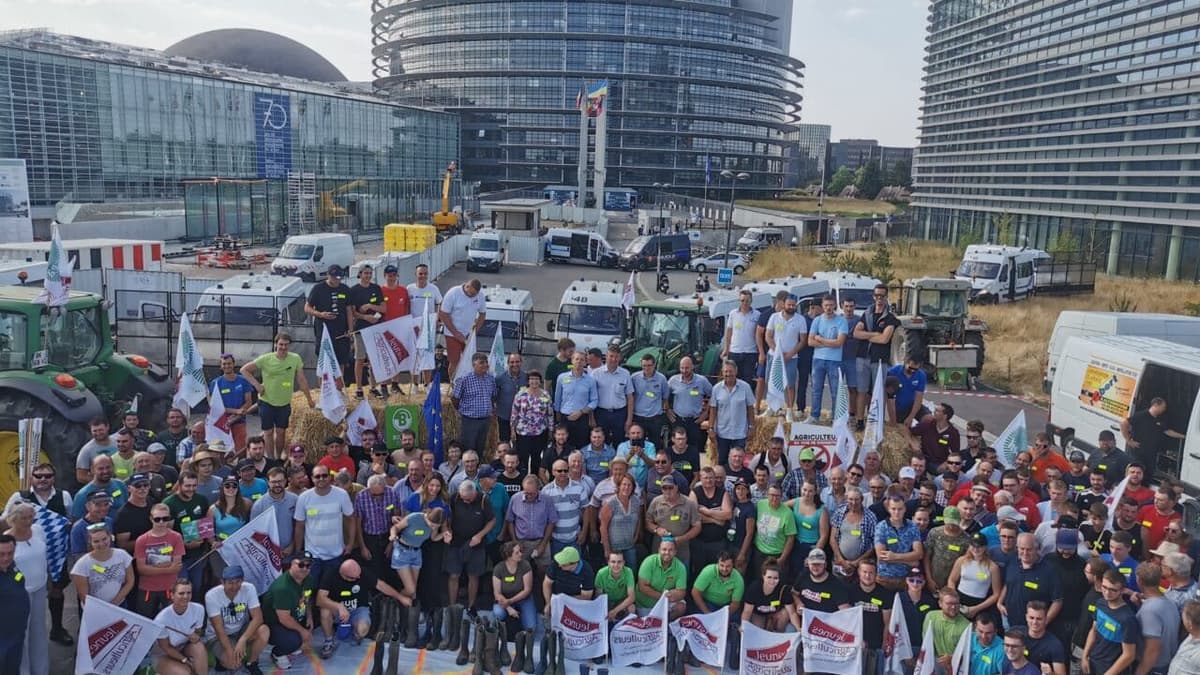
The agricultural umbrella organizations have once again called for an ‘agricultural flash action’ in Strasbourg. The agricultural federation Copa Cogeca says it is time to bring the EU’s agricultural policy “back on track” and to reaffirm agriculture as a “cornerstone” of the EU project.
In contrast, a coalition of more than three hundred European environmental organizations and climate panels issued an appeal on Wednesday urging the EU not to abandon the greening of European agricultural policy. The signatories sharply criticized the expansion proposed by the European Commission, which they say aims to remove the assumptions of the European Green Deal from agri-food policy.
As European Agriculture Commissioner Janusz Wojciechowski announced earlier, the EU will not impose fines this year on farmers who do not comply with environmental or climate standards. Farmers will also be able to continue leaving land fallow.
Promotion
Further easing of the Green Deal laws is also envisaged in a few years’ time, but many farmers are not convinced by such promises. In addition, agricultural businesses up to 10 hectares are not inspected for compliance with environmental requirements.
The Brussels meeting agenda next week includes not only the already announced relaxations. According to many farmers, these are far from sufficient. They now also demand that the European Parliament refrain from the final approval of the tightened directive against industrial air pollution, which will also apply to large intensive livestock farming from now on.
The EPP Christian Democrats from the Agriculture Committee, with the support of some conservatives and liberals, have already submitted text amendments to remove agriculture and livestock farming from that IED directive again. Earlier, they succeeded in blocking or minimizing Green Deal proposals for nature restoration, against soil pollution, and against chemical pesticides.
In addition, the demonstration will be aimed at opposing the renewed extension of export easing for Ukraine and Moldova. The removal of import tariffs and quotas was introduced shortly after the Russian invasion of Ukraine. Especially farmers in the five EU neighboring countries then complained about large quantities of cheap Ukrainian grain entering their markets with EU support.
Polish farmers have for some time been blocking many border crossings to Ukraine, but according to the European Commission, there is hardly any market distortion. Thousands of angry Polish farmers came to Warsaw on Wednesday to protest against the EU environmental rules and cheap imports from Ukraine.
The Polish farmers gathered outside the office of Prime Minister Donald Tusk, while others used their tractors to block rural highways. The border blockades and the grain conflict have put pressure on relations between Poland and Ukraine, even though Warsaw has expressed support for its neighbor since the Russian invasion.
In Brussels, members of the European Parliament's trade committee had already approved the extension of the easing on Thursday. It also includes an emergency brake for poultry, eggs, and maize: if imports exceed the average of 2022 and 2023, import tariffs will be reimposed.