

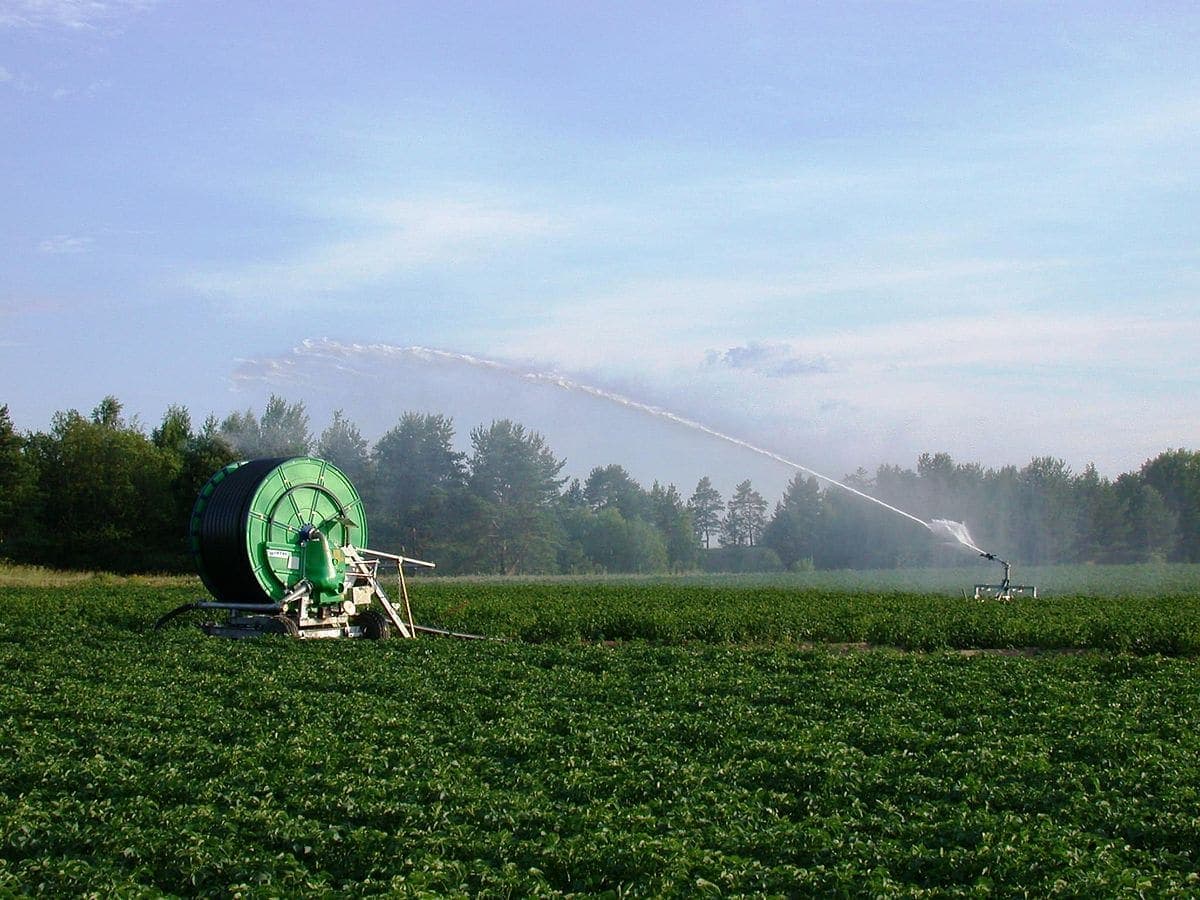
The European Union has established new rules regarding the quality of water permitted for irrigation in agriculture and horticulture. These quality criteria for irrigation water must be implemented in EU countries within three years at the latest.
As a result, highly purified wastewater from sewage treatment plants will be allowed for use, but surface water contaminated with pollutants from ditches or canals near industrial areas will no longer be permitted. VVD MEP Jan Huitema calls this a win-win situation.
Using purified sewage water can reduce the pressure on water bodies and groundwater. The decline in groundwater levels is one of the greatest threats to the availability of drinking water for the population. This decline is caused not only by agricultural irrigation but also by industrial use and urban development, the European Parliament states. This issue is currently especially visible in Central Europe, which suffers from dried fields, withered farmland, and failed harvests.
Promotion
In Flanders, a pumping ban is now in effect. Increasing drought is, according to Dutch MEP Jan Huitema (VVD), a challenge that farmers all over Europe face. “We must not only use groundwater and surface water for irrigation but also look for new sources. Wastewater can be purified to such an extent that it can be reused for irrigating agricultural crops: a win-win situation for people, farmers, and the environment,” he told EU journalists earlier.
Soon all EU countries will have to apply the same criteria to ensure food safety and public health everywhere. These criteria are particularly important for the Netherlands. VVD MEP Jan Huitema: “In the Netherlands, we already impose very high standards on water used for irrigation. These quality requirements must be uniform throughout Europe. This is important for food safety and public health, as well as for our competitive position in Europe: after all, vegetables and fruit from other EU countries are also available in our supermarkets.”
Although the EU rules primarily concern agriculture, water reuse could also be a solution for industry. In the past, the European Commission indicated that it wants to include water reuse in assessing companies’ permit applications. In the Netherlands, several water boards have already taken the initiative to develop the concept of the ‘water factory.’