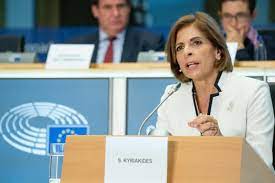
These proposals face potential delays in the EU’s legislative process and could end up caught in the crossfire of the European election campaign later this year. Commissioner Stella Kyriakides (Food Safety) stated on Monday in the EP Agriculture Committee that there is sufficient parliamentary and political support to handle the proposals.
Earlier, Minister of Agriculture Piet Adema said at a meeting of agriculture ministers that the Netherlands is not against nature restoration. Other hesitant countries also say they do not oppose the principle of nature restoration but believe the European Commission should come up with additional funding.
Regarding the nature restoration law, ministers and EU politicians are still seeking many amendments, so there is currently a concrete majority only on a few key points. This negotiation process takes place not only in the European Parliament’s Agriculture Committee and the Agriculture Council but also in the Environment Committee and among environment ministers.
The Netherlands and other member states believe the European Commission must allocate more funds to achieve the nature restoration goals. Several other member states have also expressed concerns about various aspects of the legislation. Some countries worry about the impact on their important forestry sectors, while others think the scope of the new law goes too far.
The nature restoration plan is increasingly causing disagreement within EU institutions. The steering of the nature restoration laws is primarily handled by ENVI (Environment), while AGRI (Agriculture) may only give advisory input. This must ultimately result in a unified position.
This procedure opens the possibility of delays and from postponement to abandonment, as eight countries already want. Commissioner Kyriakides insisted on Monday afternoon in Brussels that the Commission wants to push several “defining” proposals (pesticide use, animal welfare, nature restoration) through the European decision-making machine before the summer recess.