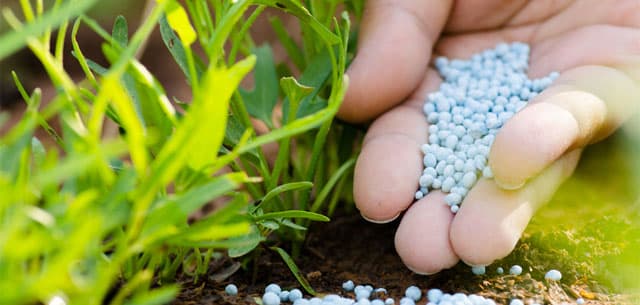
Most groups in the European Parliament still see no merit in the European Commission's proposals to reduce the use of crop protectants in agriculture and horticulture, and even to halve the use of chemical agents.
However, Commissioner Stella Kyriakides (Health) reminded the Agriculture Committee yesterday that Brussels has already made several concessions, and is willing to reach compromises on virtually all other points of criticism. She urged the Agriculture Committee to come up with solutions rather than objections, reservations, and counterarguments.
Group spokesperson Herbert Dorfmann from the EPP said that the two controversial nature restoration proposals are based on the incorrect assumption that agricultural production can remain the same if chemical use has to be halved. The Christian Democrats believe the proposal should not be amended but withdrawn entirely.
The Social Democrats of the S&D group do not go that far. According to agriculture spokesperson Clara Aguilera Garcia, 'less chemistry in agriculture' is simply necessary, and society wants it as well. She believes the Commission should adjust the proposal and first clarify what it means by those ‘vulnerable areas.’
S&D also think that other (green, environmentally friendly) crop protectants should be developed and authorized before Brussels can ban substances.
Commissioner Kyriakides made clear that the Commissioners have since abandoned a ‘total ban’ on agricultural plots, and that from now on the ‘least harmful substances’ may be used there. She also said that task assignments per country will take into account how much those EU countries have already reduced usage.
Ulrike Müller (Renew Liberals) said there is ‘too much ideology in the nature restoration proposals’ and pointed out that work is already underway on ‘alternatives,’ without any examples being given. Martin Häusling (Greens) and Anja Hazekamp (United Left) made it clear that they still support plans to reduce the use of chemical agents in agriculture.
Hazekamp also recalled that opponents of environmental measures in agriculture repeatedly resort to claims about food security being endangered.
‘Those arguments were also used over recent years during the euro crisis, Brexit, the coronavirus pandemic, the war in Ukraine, and now with nature restoration.’ According to her, it is not that, but the loss of biodiversity that poses a real threat to agricultural food production.
From Kyriakides’ wording, it seems the issue of the PPP (‘Plant Protection Plan’) may become a stumbling block for the Agriculture and Fisheries Ministers during their Council meeting on the weekend of December 11 and 12.
Several EU countries have already expressed strong objections there, but Kyriakides pointed out that so far no country has formally opposed it. Many objections among agriculture ministers also concern the absence of an ‘impact assessment,’ which is usually conducted when new European laws are introduced.
Earlier, Commissioners Frans Timmermans (Climate), Virginijus Sinkevičius (Environment), and Janusz Wojciechowski (Agriculture) stated that such studies have been carried out and published, but that the European Parliament and the ministers are apparently not satisfied with them.