

The European Parliament, the European Commission, and the finance ministers have broadly agreed in Brussels on the European Union's multiannual financial framework, covering the years 2021 through 2027.
A large majority of the European Parliament supports the deal now that EU governments want to allocate an additional 16 billion euros to certain ‘future projects,’ and because EU countries have finally established a penalty system for non-compliant member states.
A breakthrough is formed by the EU countries’ agreement to allow the European Union itself to impose and collect taxes directly. This had been a taboo for decades. Soon, Brussels will be able to impose a CO2 import levy on imports of environmentally polluting products, on plastic packaging, and probably also on profits booked in Europe by global internet companies.
Promotion
The details will be negotiated over the next three weeks by delegations from the European Parliament, the Commission, and the Council of Ministers. After final approval in December, this multiannual budget totaling 1.8 trillion euros will be the largest financial package ever financed from the EU budget.
The PvdA (Labour Party) European delegation said in an initial response that important steps have been taken, especially regarding the ‘rule of law mechanism’ — that is, the penalty system linked to subsidy conditions. PvdA delegation leader Agnes Jongerius said on this: “Countries undermining the values of the European Union will have their EU subsidies cut. You cannot interfere with the independence of the judiciary or misuse European taxpayer money without consequences.”
The PvdA also called it hopeful that 30 percent of the budget is linked to climate goals, which is a positive development for the Green Deal of (Dutch European Commissioner) Frans Timmermans.
The 1.8 trillion euros is the total amount of expenditure for the next seven years. Thirty percent of that, about 600 billion euros, must go to climate objectives. So far, center-right factions in the European Parliament have reservations about applying sustainability requirements.
In a new report about funding the ‘European Green Deal,’ Dutch PvdA Member of the European Parliament Paul Tang demonstrates that financing this extensive Green Deal is indeed possible: “Do not call anything impossible if you simply have not yet explored the possibilities. In this report, we have done just that, and found enough ways to finance the transition to a sustainable future. Our proposals build a bridge between ambition and reality.”
“We also must stop mopping with the tap running. Investing in a social and sustainable future also means putting an end to expenditures that cause harm to people and the environment. So no more subsidies to fossil fuels, and no state aid to companies that exploit their employees as part of their business model.”
Dutch Member of the European Parliament Peter van Dalen (Christian Union) abstained from voting on the budget for the coming year, 2021. According to him, increasing all budgets for next year is simply not acceptable in these times. The budget certainly contains good elements according to Van Dalen.
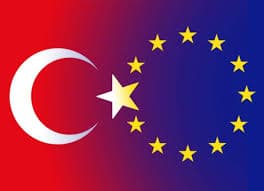
Van Dalen is especially pleased that the so-called accession funds for Turkey are being stopped. In 2021, no EU money will go to the Turkish government or other government bodies to prepare for Turkey’s accession. Only a few independent organizations in Turkey that fight for the rule of law will receive EU funds. Van Dalen states that with this step, the possible accession of Turkey to the EU has been financially halted.