

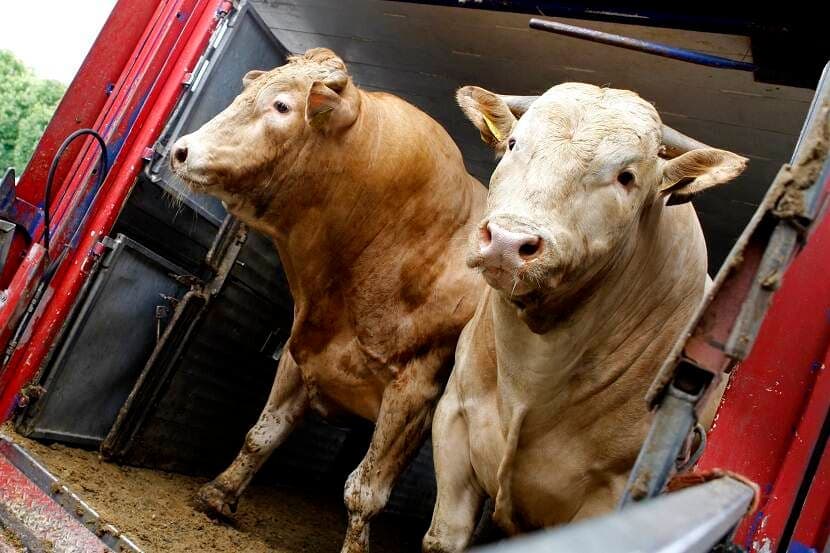
The fate of farm animals in the European Union can only be improved with farmers, not without them. Greater animal welfare can primarily be achieved through better laws in the EU countries, and better enforcement of those laws. This was advocated by the French liberal MEP Jérémy Decerle in an annual evaluation on the welfare of farm animals.
The European standards for animal welfare are among the highest in the world. “We want other countries around the world to also follow more animal-friendly rules. We must not export the problem of animal suffering by continually tightening our own rules. We are better off harmonizing our national rules and coordinating with each other,” Lecerle argued.
He pointed out that ‘animal suffering’ is attracting more and more attention in society, in the broadest sense of the word. Not only the fate of stray dogs in Southern Europe or mistreated donkeys in Eastern Europe, but also the way slaughter animals are transported or the sizes of pens and cages.
Promotion
The rapporteur says that politicians in Strasbourg should neither belong to the camp that turns their heads away and remains silent nor to the fanatics who only want to ‘intervene’.
A resolution adopted by 496 votes to 140 calls for clearer EU rules on animal welfare, reducing room for interpretation. The laws must be applied uniformly and fully in all EU countries.
In a veiled manner, the European Parliament’s rapporteur expressed the often-heard criticism that (especially) in rural areas of Central and Eastern European countries, authorities have hardly any insight into the treatment of farm animals. Also, many EU countries still have limited and inefficient inspection services.
As a reasonable expansion of existing rules, the annual report advocates the possibility of including more animal species under the term ‘farm animals.’ This is not yet consistent across all EU countries. For many animal species, including dairy cows, sheep, and turkeys, there are no specific protection rules at all. Rapporteur Decerle also calls for the introduction of an ‘animal welfare label’ on food products. ‘Customers in the supermarket want to know what is in their food, and where it comes from.’
“With this report, a majority of the European Parliament already takes a stand against overly drastic EU measures based on emotion,” said Dutch MEP Bert-Jan Ruissen (SGP).
The Party for the Animals thinks differently. “Unfortunately, mostly economic interests played a role. The implementation report pays hardly any attention to the problems with the current animal welfare legislation,” said MEP Anja Hazekamp. The Party for the Animals therefore voted against the implementation report and submitted its own alternative proposal.