

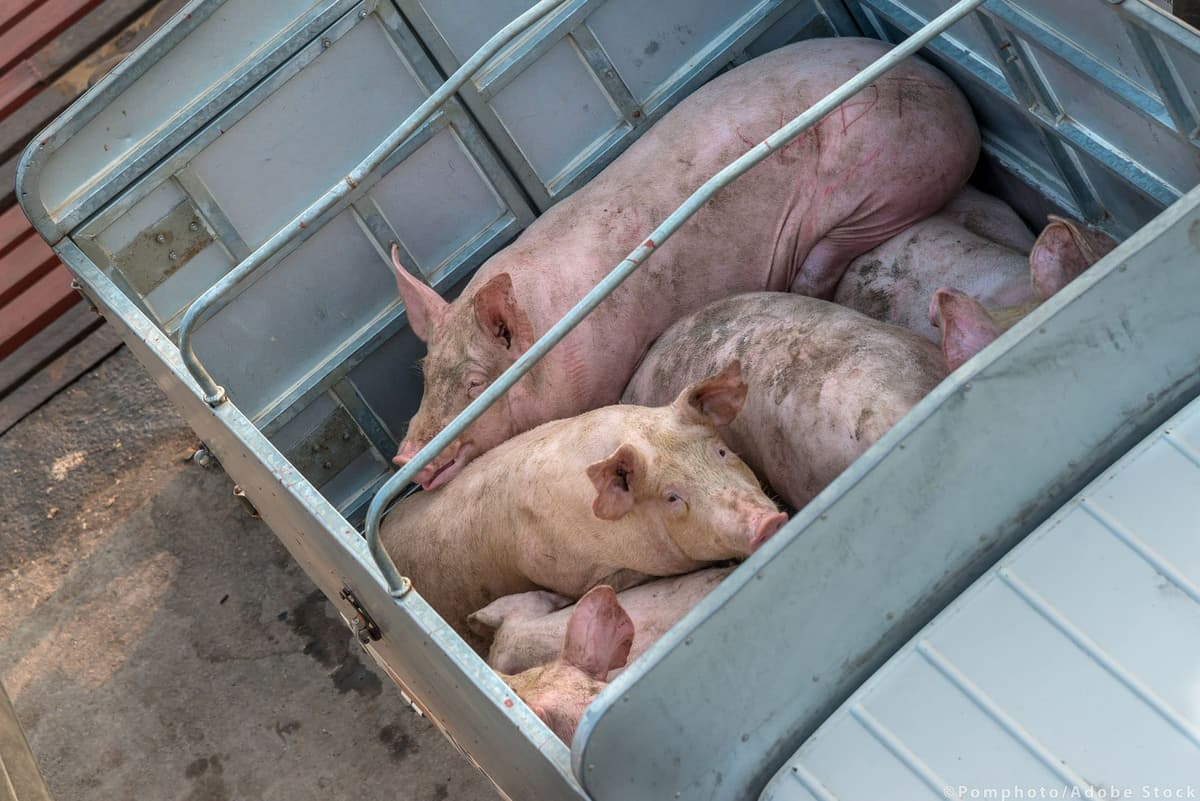
This week, the European Parliament will decide that the transport of live animals in the EU must be further restricted. In Strasbourg, votes will be held not only on the recent recommendations of a special inquiry committee but also on additional proposals.
Some MEPs are pushing for even stricter amendments to achieve a complete ban on the transport of all live animals. From 2023, journeys with animals destined for slaughter may not exceed eight hours and are not permitted at temperatures above thirty degrees Celsius.
An exception for certain transports above 35 degrees will be removed. Better resting places must be established, and cameras installed for inspections at animal loading and unloading sites. The transport of animals younger than 35 days will also be prohibited.
Promotion
However, the new rules will not apply to the transport of non-slaughter animals, nor to transport by sea. The European Parliament wants to put an end to what they call 'the shuffling of animals,' where livestock is bred in one EU country, slaughtered in others, and processed and packaged in yet others.
MEPs from the Greens and the Party for the Animals have submitted amendments for a transport ban longer than eight hours for all animals, not just those for slaughter. This should also apply to all sea transport, with a maximum limit of 24 hours. In the ANIT committee, the vote on this ended in a tie of 30 against 30 votes, with one abstention. A majority might still be possible in the full Parliament.
In a proposal for a 24-hour transport limit for sea transport of animals, Irish calf exports to the EU mainland would remain unaffected. However, this would block exports to countries outside the EU.
The transport of tens of thousands of sheep from Romanian ports via the Black Sea and the Bosporus to Islamic countries in the Middle East has been controversial for many years. The shipping of calves from Spanish ports to North Africa also falls into the category of 'exports outside the EU.'
Many committee members want to put an end to what they called ‘the shuffling of animals,’ where livestock is bred in one EU country, slaughtered in others, and processed and packaged in yet others. Why transport live animals if you can also transport their carcasses?, it was noted last month in the ANIT committee.