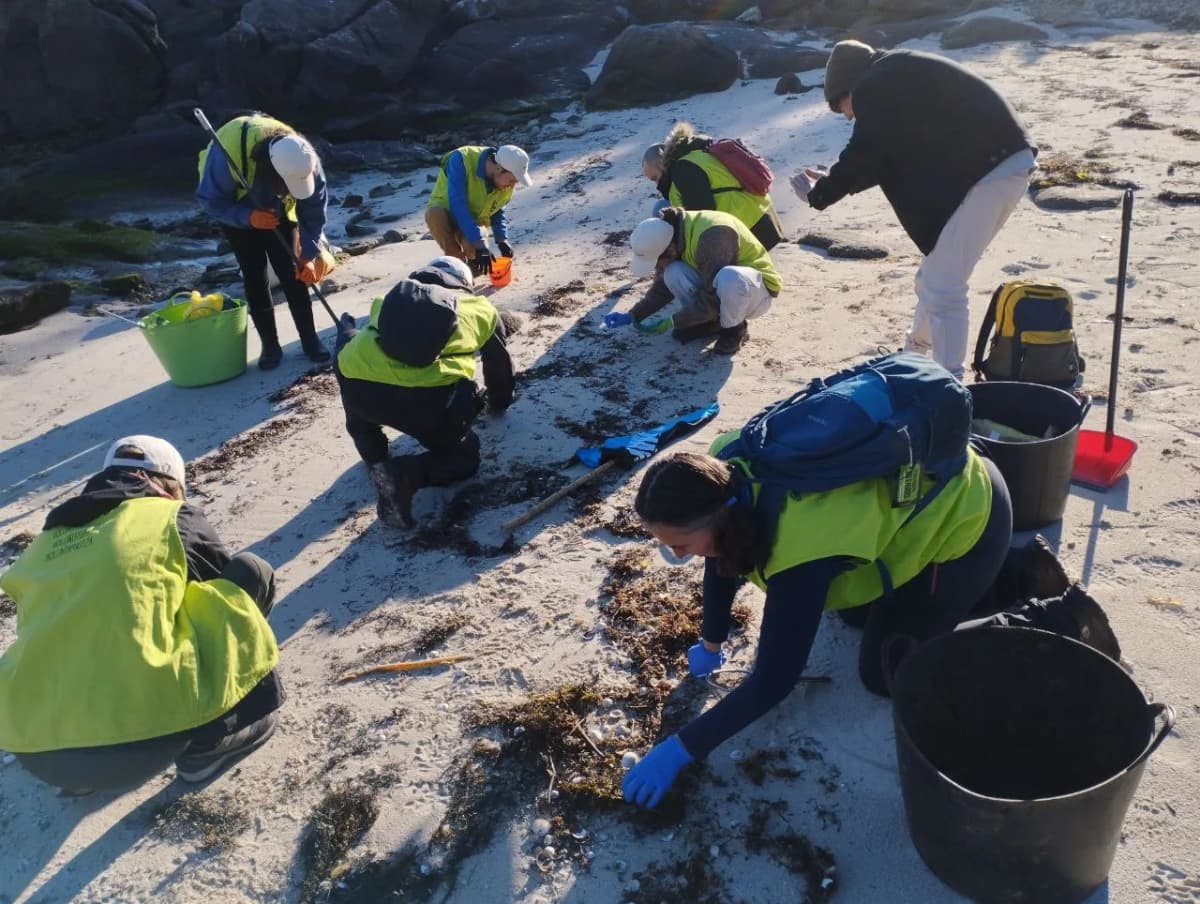
At the beginning of December, a container ship off the coast of Portugal lost part of its cargo. These plastic pellets, a few millimeters in size, are used among other things as filler material in packaging. Five years ago, a similar environmental disaster occurred on the Dutch and German Wadden coast.
The European Commission recently announced new rules against plastic as packaging material. However, Environment Commissioner Virginijus Sinkevičius does not want to apply this (yet?) to shipping because such matters are already regulated internationally through the International Maritime Organization (IMO). Still, the EU could agree on measures for sea transports heading to EU countries.
Dutch MEP Anja Haga (Christian Union) wants to advocate on Thursday in Strasbourg for stricter rules for container ships and push for a ban on plastic pellets that are not biodegradable. Last week, the European Parliament’s Environment Committee (ENVI) already drafted a resolution on this matter that will be voted on this week.
"Millions of plastic pellets have been washing up on the Spanish coast for weeks due to a container lost overboard. Five years ago, I witnessed firsthand the enormous damage the MSC Zoe disaster caused in the Wadden area. I then decided to live plastic-free. It pains me to see that once again such a huge environmental disaster is unfolding," said Haga.
Plastic pellets, or polypropylene, are also used to polish metal products. It is shock-absorbent material that can also serve as filler material. This helps prevent fragile products from damaging each other during transport if there is too much space in the packaging. According to the European Chemicals Agency, 176,000 tons of plastic accidentally enters the environment annually.
Joao Albuquerque, the lead negotiator for the European Parliament, said on Thursday that the new law should also cover accidental discharges in the shipping sector. "This has become very urgent. These kinds of environmental disasters are almost always preventable."
The European Commission initially proposed that companies transporting more than 1,000 tons of plastic pellets undergo inspection. The Parliament is now considering lowering that threshold to 250 tons. EU politicians also want the law to cover not only plastic pellets but also plastic flakes, powders, and substances used to make products.
The European Parliament aims to expedite this so that negotiations with EU countries can be concluded before the EU elections in June. Green and liberal MEPs support this approach, but center-right Christian Democrats oppose some parts, such as the attempt to expand the number of companies covered by the law, arguing this would create too much administrative burden for small businesses.