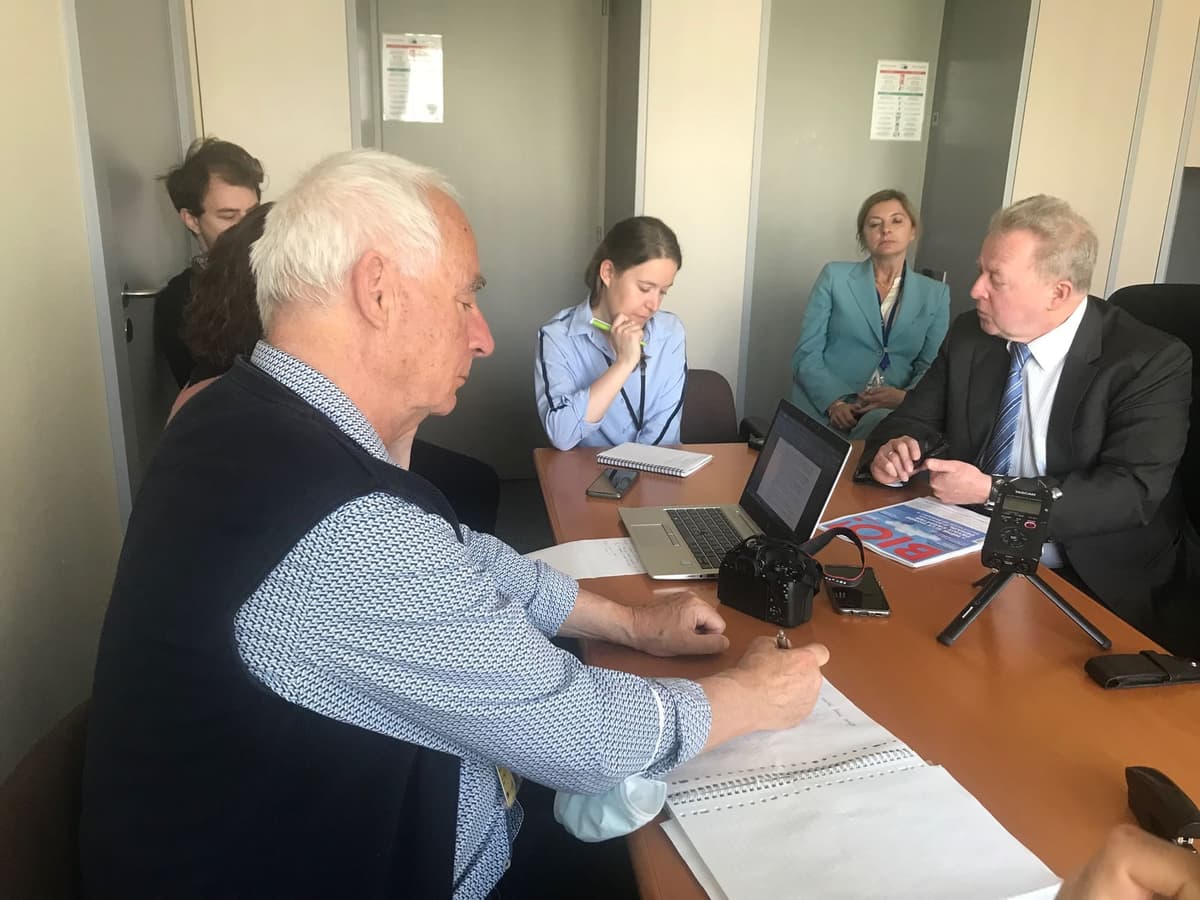
European Agriculture Commissioner Janusz Wojciechowski said that for most small and medium-sized agricultural businesses, switching to organic farming might become a last resort.
Especially now, with energy and artificial fertilizers becoming even more expensive due to Russia’s war against Ukraine, switching to farming without chemical inputs only makes more sense, Wojciechowski said Tuesday in Strasbourg to French, Flemish, and Dutch agricultural journalists.
For tens of thousands of family farms, especially in Eastern and Central Europe, 'organic' will be the only option to continue existing as an agricultural business, Wojciechowski expects. He referred to the past twenty years during which the number of small and medium-sized farms steadily declined in all EU countries. In that period, 4 million small farms disappeared in the EU.
Proponents and opponents in the European Parliament basically agreed on Tuesday in Strasbourg that there cannot be a single agricultural package that applies to all 27 EU countries. This is due not only to large geographical differences and landscape types, but also significant differences in consumption, purchasing power, and spending habits.
For example, a resident of Poland spends an average of 4 euros per year on organic food, while in Denmark it is 300 euros. The average farm size in France, Germany, or Italy is two to three times larger than in Malta or Cyprus. Almost every Dutch or Danish village has an organic shop, but in Poland you must drive 80 kilometers for one.
Wojciechowski responded positively and approvingly to the report that the European Parliament adopted Tuesday regarding his 25-point plan. Last March he presented the EU action plan for the development of organic production, which had already been announced in the “Farm to Fork” strategy and the biodiversity strategy.
These strategies are part of the European Green Deal, accepted by the European Parliament, but are controversial among agricultural circles because they include many climate and environmental aspects. Moreover, many feel they do not sufficiently consider agricultural practices on the farm. Wojciechowski considers the current agricultural policy a good compromise between environmentalists and farmers, he said in his explanation.
Austrian MEP Simone Schmiedtbauer, as rapporteur for the Agriculture Committee, has developed a farmer-friendly version of Wojciechowski’s organic plan over the past months. Her report, on one hand, supports and emphasizes the importance of ‘switching to organic,’ but on the other hand, drops the target of 25 percent organic farming (it is not even mentioned!).
Dutch MEP Mohammed Chahim (PvdA) commented: “It is important that we make the agricultural sector more sustainable and that a significant portion of agricultural land is allocated to organic farming. This is not only better for the environment but also for animal welfare.”
The United Left and the Greens attempted via an amendment to include the target of one quarter organic farming by 2030 in the texts, but there was no majority for this. The European Parliament voted by a large majority to approve Schmiedtbauer’s ‘more nuanced’ and ‘farmer-friendly’ version of Wojciechowski’s ‘rough draft’ of the organic action plan.