

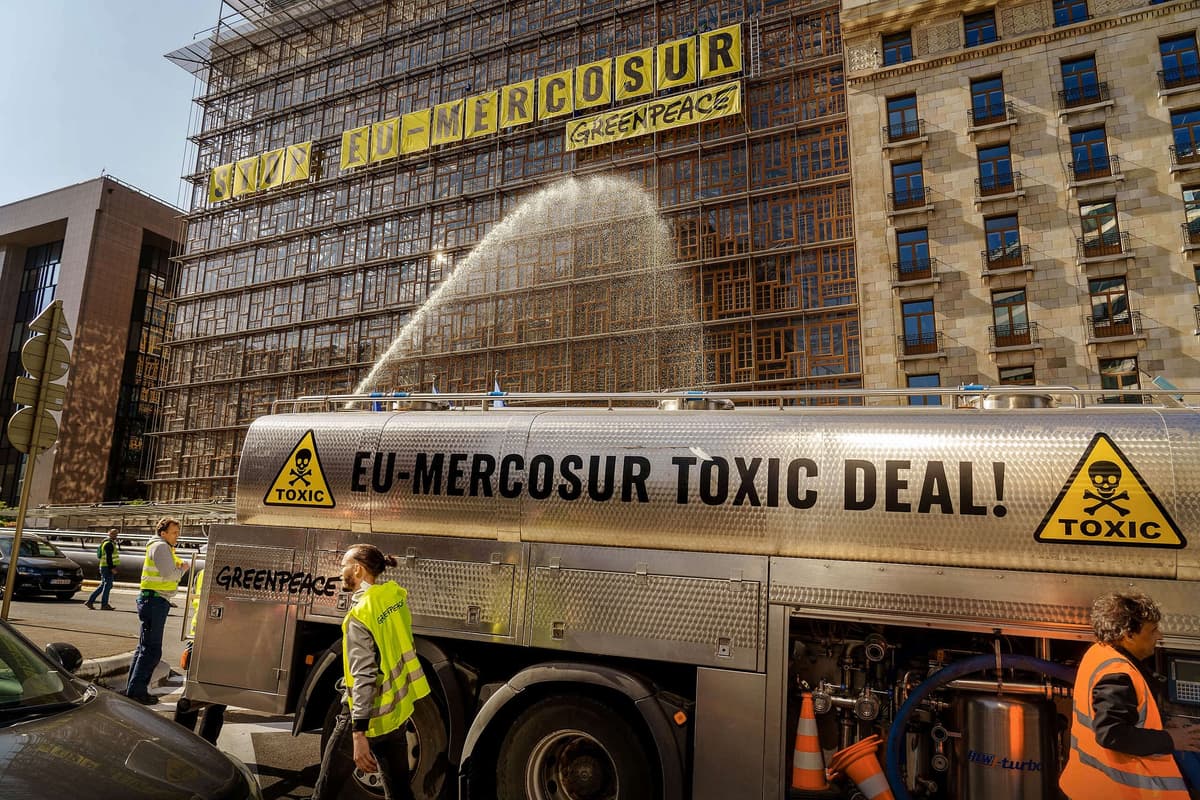
Supporters, including many members of the European Parliament, mainly point to the benefits and accuse opponents of manipulating opinion and spreading misleading information. On Wednesday, in Strasbourg at the European Parliament, yet another farmers' protest will be held by the influential European agri-lobby group.
In Poland, a heated debate is taking place about the consequences of the Mercosur agreement. According to Polish media, opponents are frightening farmers with doom scenarios about cheap meat and agricultural products from South America. These products are said to be produced under lower production and quality standards, weakening the competitive position of Polish farmers.
The Polish government is under pressure at home from conflicting interest groups. Furthermore, Poland holds the presidency of the European Union this semester and must ensure the smooth running of the EU decision-making process in Warsaw.
Promotion
European Agriculture Commissioner Christophe Hansen mainly emphasizes the benefits of the trade agreement. In an interview, he stated that the European agricultural sector actually benefits from access to new export markets. According to Hansen, it is crucial that the EU makes clear agreements with Mercosur countries regarding quality and environmental standards to create a level playing field. Only then can it be prevented, in his view, that European farmers become the victims.
If unfair competition were to arise, Brussels has prepared a compensation scheme exceeding one billion euros, partly at the insistence of French President Macron. French farmers have recently blocked roads again in protest against the final approval of the Mercosur agreement.
A recurring issue in the debate is that incorrect or incomplete information clouds the discussion. An EU spokesperson warns that farmers in several EU countries are being misled by 'fake news.' According to this source, the European Commission must do more to disseminate accurate information. In the vacuum created by a lack of reliable data, resistance can easily emerge and grow further, he warned.
In the European Parliament, the resistance is not so much fueled by political opinions or faction standpoints, but mainly by national feelings. Politicians from countries with strong agricultural sectors seek each other out. They maintain an agricultural coalition that is not necessarily ideological but primarily determined by economic interests. This complicates reaching consensus in Brussels.
Supporters of the deal say that the economic benefits should not be simply dismissed. In exchange for opening the market, the EU could also demand that Mercosur countries adhere to certain environmental standards. Moreover, the agreement could lead to innovations, knowledge exchange, and new trade relations. European trade with South America is not only about agriculture or food, but also about technology, cars, and other consumer goods.
Nevertheless, there remains great doubt. The big question is whether sufficient EU control is possible regarding compliance with strict rules on environment, animal welfare, and food quality. Farmers' organizations raise various questions about clear guarantees, while political leaders are under pressure from both trade partners and their own constituencies. The lack of consensus within the EU and the wide variety of national interests complicate the final decision on the trade agreement.