

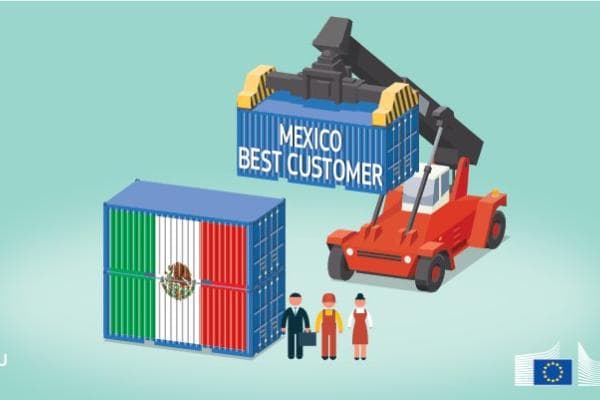
The renewed trade agreement between the EU and Mexico aims to further reduce trade barriers. The deal includes extensive provisions for abolishing import duties on various agricultural and industrial products.
For Mexico, the treaty offers better access to the European market, while European companies benefit from more favorable conditions in Mexico.
One of the key elements is the elimination of import duties on cheese, pork, and other food products. This should lead to lower costs for consumers and new opportunities for producers on both sides of the Atlantic Ocean. For European farmers, this means a better position in the Mexican market.
Promotion
In addition to agriculture, the agreement also focuses on sustainable trade and investments. The EU and Mexico have made commitments to respect environmental standards and labor rights. These provisions are intended to ensure that economic growth goes hand in hand with social responsibility and environmental protection.
The renewed trade agreement is the result of years of negotiations and updates an earlier agreement from 2000. According to European officials, the deal better addresses current economic challenges.
The timing of the agreement is notable. The new US president Trump says he wants to impose high tariffs on European and Mexican goods. This measure, intended to protect the US economy, is seen by critics as harmful to international trade relations.
Although the agreement has mostly positive reactions, there are also concerns. Some Mexican producers fear they will not be able to compete with European companies. At the same time, there are worries in Europe about compliance with the agreed terms, especially regarding sustainability.
The agreement still needs to be ratified by the parliaments of the involved parties. This process may take some time, but both sides have indicated they are determined to implement the deal as soon as possible.
This week, the European Parliament in Strasbourg will decide on the ratification of another EU trade agreement, with the four South American Mercosur countries. European farmers have protested against that agreement for years because it harms their own trade due to increased imports of South American food products.